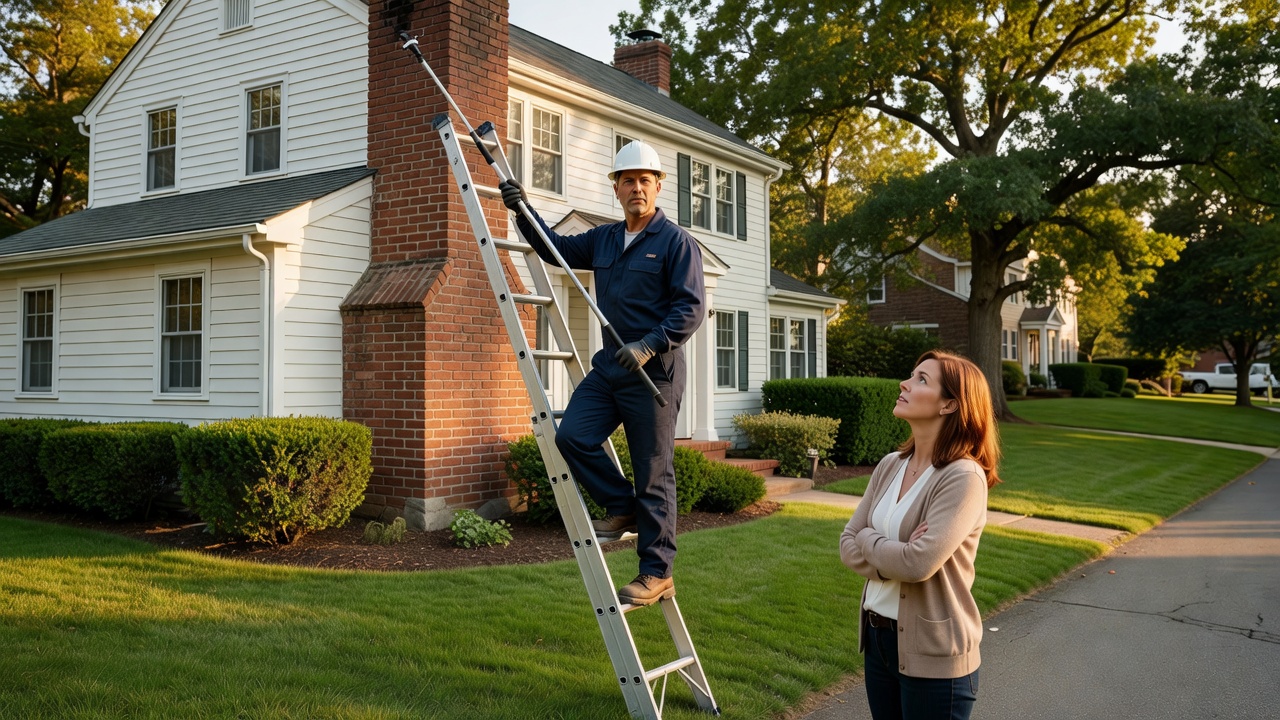
Creosote Removal in Greenvale and Sea Cliff: What You Can Handle and What You Shouldn’t
Most chimney fires do not announce themselves. They can start quietly inside a flue when accumulated creosote ignites. For homeowners across Nassau County’s North Shore, from Sea Cliff to Greenvale, creosote buildup is an important part of regular chimney maintenance.
Homeowners who use their fireplaces throughout the heating season need to understand what they can safely manage themselves and when professional help makes more sense. The goal is not to turn every chimney concern into a service call. It is to know where routine maintenance ends and a professional inspection or cleaning becomes the safer choice.
What Creosote Is and Why It Builds Up
Creosote is a byproduct of burning wood. When smoke cools as it moves through the chimney, certain compounds can condense on the inside of the flue.
Creosote can appear in different forms. Light, flaky deposits may be easier to remove. More stubborn deposits can become sticky or tar-like. Heavily glazed deposits can become hard and difficult to remove with a standard chimney brush.
Older homes in Sea Cliff and Greenvale can have masonry fireplaces and chimney systems that require closer attention. Cold outdoor temperatures can contribute to faster cooling of flue gases. Burning wood that has not been properly seasoned can also increase smoke and moisture.
These conditions can contribute to heavier creosote accumulation over time.
What a Homeowner Can Safely Do
There are several basic maintenance steps a careful homeowner can handle without attempting a full chimney cleaning.
Improve Your Burning Habits
Good fire management is one of the simplest ways to reduce creosote formation.
Use properly seasoned firewood. Hardwood such as oak, maple, or cherry is commonly used for fireplaces. Avoid burning wet wood or maintaining long, smoky fires.
A properly established fire should have adequate airflow. Do not intentionally restrict the draft in a way that causes the fire to smolder.
Perform a Basic Visual Check
A flashlight can help you look into the firebox and inspect the visible lower portion of the flue.
You may notice obvious soot accumulation, debris, nesting material, or a damper that does not move properly.
A visual check can provide useful information, but it is not a substitute for a professional chimney inspection.
Address Light Surface Deposits Carefully
Some homeowners may choose to handle limited surface cleaning when the chimney is accessible and the deposits are light and flaky.
This requires the correct brush for the chimney and appropriate protection for the surrounding living area.
The important distinction is the condition of the buildup. If the material appears thick, sticky, tar-like, or shiny, stop rather than trying increasingly aggressive DIY methods.
When Creosote Removal Should Be Left to a Professional
Some chimney conditions are difficult to evaluate or clean safely without specialized equipment.
Heavy or Glazed Creosote
Heavier deposits may not respond to ordinary brushing. Professional sweeps have access to specialized mechanical equipment and cleaning methods designed for more difficult buildup.
Trying to force stubborn deposits out without understanding the condition of the flue can also create problems if the chimney has underlying damage.
Chimney Liner Concerns
Creosote is not the only issue that can develop inside an older chimney.
Clay flue tiles can crack. Mortar can deteriorate. Masonry can experience damage from years of weather exposure and freeze-thaw cycles.
A professional inspection can help identify problems that are not visible from the firebox.
A Level 2 inspection may also be appropriate in certain situations, such as a home purchase or a significant change to the heating system. The appropriate inspection level depends on the circumstances.
After a Chimney Fire
If you believe a chimney fire has occurred, stop using the fireplace and have the chimney evaluated by a qualified professional.
A chimney fire can expose the flue and surrounding components to extreme heat. Damage may not always be obvious from the fireplace opening.
Professional evaluation can determine whether the chimney can safely be used again or whether repairs are necessary.
When Documentation Matters
Professional service can also be useful when you need maintenance documentation for a home sale, insurance matter, or other recordkeeping requirement.
Ask the contractor what documentation they provide after the inspection and cleaning.
Common Mistakes That Can Increase Creosote
Many chimney problems develop because of small decisions repeated over time.
Burning Unseasoned Wood
Wet or poorly seasoned firewood can produce more smoke and moisture during combustion. That can contribute to deposits inside the chimney.
A moisture meter is an inexpensive way to check whether firewood is sufficiently dry before burning.
Letting the Fire Smolder
A smoky, poorly ventilated fire can increase the amount of combustion byproducts moving into the flue.
Instead of trying to keep a fire burning slowly for long periods, use properly seasoned wood and maintain adequate airflow according to the fireplace manufacturer’s instructions.
Skipping Inspections
A fireplace can appear to work normally even when deposits or damage are developing inside the chimney.
Regular inspection and cleaning can help identify problems before they become more difficult or expensive to address.
What Does Professional Creosote Removal Cost?
The cost of chimney cleaning and creosote removal varies based on the chimney’s condition, accessibility, flue length, amount of buildup, and the cleaning method required.
As a general local benchmark, homeowners in Sea Cliff, Greenvale, and surrounding Nassau County communities may encounter approximate ranges such as:
- Level 1 inspection and standard cleaning: $175 to $275
- Cleaning involving heavier deposits or additional treatment: $300 to $500
- Difficult glazed creosote removal: $600 to $1,000 or more
These figures are estimates rather than guaranteed prices. If a chimney inspection reveals damaged liners, masonry problems, or other repairs, those costs would typically be separate.
The best way to compare prices is to ask exactly what the quoted service includes.
Get an Honest Assessment Before the Heating Season
If you live in Sea Cliff, Greenvale, or another North Shore community, understanding the condition of your chimney is more useful than guessing based on how the fireplace looks from inside the house.
Ridgewood Chimney serves Sea Cliff, Greenvale, and communities throughout Nassau and Bergen County. If you are unsure how much creosote has accumulated or whether your chimney needs professional attention, contact the company to discuss an inspection.
The goal should be a clear assessment of what your chimney actually needs and what it does not.
Related from Greenvale Chimney: Chimney Repair in Greenvale, NY · Chimney Repair in Greenvale