Fireplace Cleaning Greenvale NY: What Homeowners Should Know
A fireplace can sit unused for months while conditions inside the chimney change. Animals can enter an open chimney, debris can accumulate, and moisture can contribute to deterioration even when the fireplace has not been used recently.
For homeowners in Greenvale, Muttontown, East Norwich, Brookville, and nearby Nassau County communities, understanding what fireplace cleaning actually involves can help prevent confusion about when a chimney needs to be swept and what an inspection should cover.
“I Only Used It a Few Times, So It Can’t Need Cleaning”
The number of fires alone does not determine whether a chimney needs cleaning.
Creosote and other combustion deposits can accumulate in a chimney when wood is burned. The amount and type of buildup depend on factors such as the fuel, burning practices, appliance, and chimney system.
CSIA recommends that masonry fireplaces be swept when soot buildup reaches approximately 1/8 inch, or sooner when glaze is present. Factory-built fireplaces have different guidance and should be evaluated based on their specific system.
Even an infrequently used chimney can have other problems. CSIA notes that animals can build nests in unused flues and that deterioration can make a chimney unsafe.
That is one reason annual inspection is recommended even when fireplace use is limited. CSIA follows NFPA 211 guidance that chimneys, fireplaces, and vents should be inspected at least once a year for soundness, deposits, and clearances, with cleaning, maintenance, and repairs performed when necessary.
“I Can See the Firebox, So I’d Know If Something Was Wrong”
The visible firebox is only one part of a fireplace and chimney system.
A complete chimney sweeping involves the flue and smoke chamber rather than simply brushing the area that can be seen from the room. CSIA specifically notes that cleaning only the visible firebox is not a complete chimney sweeping.
A Level 1 inspection focuses on readily accessible portions of the appliance and chimney. The inspector determines whether the system is clear and suitable for continued use. Depending on the chimney configuration, direct visual inspection may be sufficient, while offsets or other conditions can make an internal camera inspection useful.
A camera should therefore not be presented as a mandatory part of every routine cleaning.
If a chimney has damaged flue components, an obstruction, or another condition that cannot be adequately evaluated through normal access, a more detailed inspection may be appropriate.
“Chimney Sweeping Is a Dusty Mess”
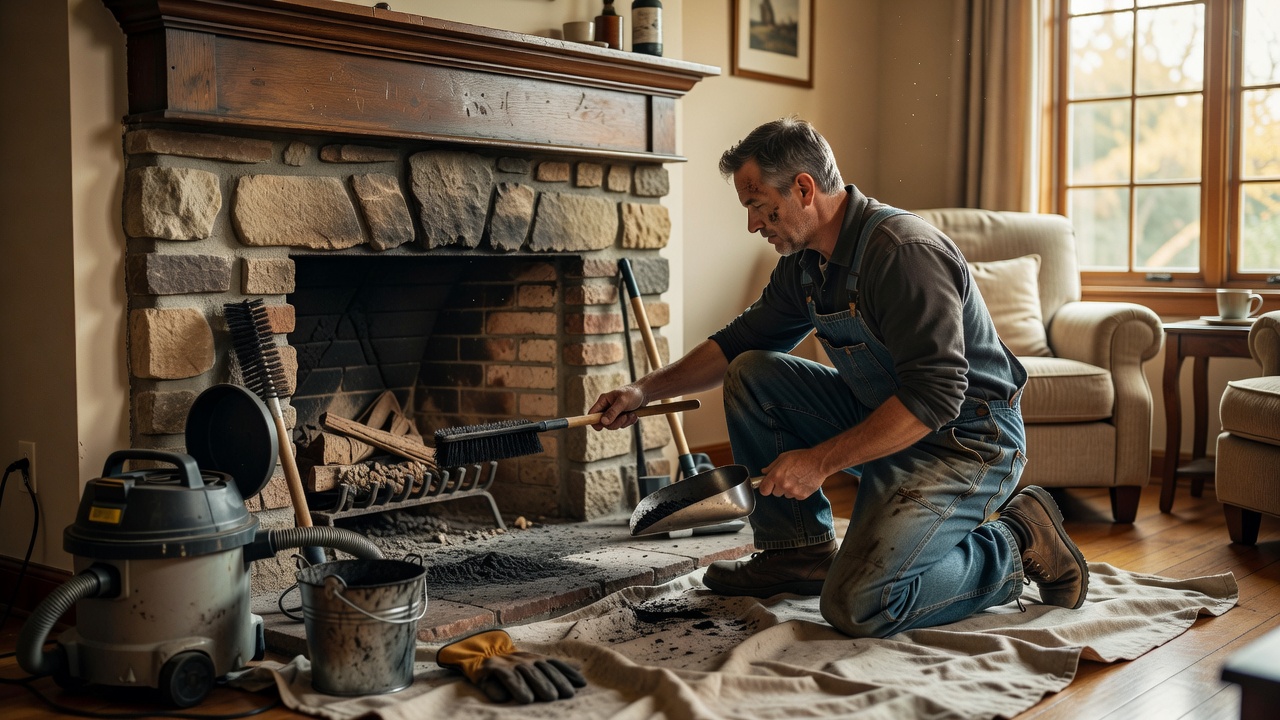
Professional sweeping should include reasonable measures to contain soot and debris.
The exact equipment varies between companies and chimney configurations. Vacuum systems, protective coverings, and other containment methods can help keep the work area clean.
However, homeowners should not assume that every professional uses a specific type of vacuum or that a properly performed cleaning can never produce any dust.
Before scheduling service, ask the company how it protects the fireplace and surrounding room during sweeping. A clear explanation of the cleanup process is useful when comparing contractors.
“The Chimney Sweep Just Brushes the Flue and Leaves”
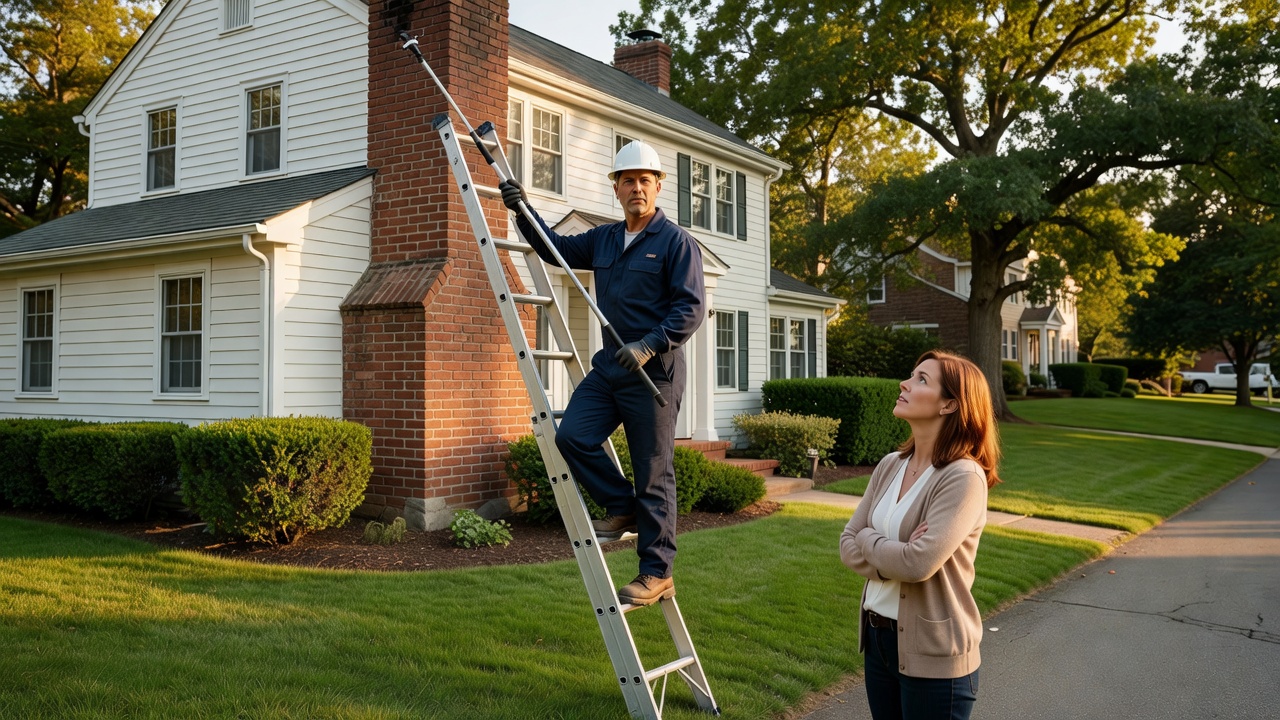
A proper chimney sweeping involves more than brushing a visible opening.
CSIA describes a complete chimney sweeping as including the chimney flue and smoke chamber. A Level 1 inspection also evaluates readily accessible portions of the appliance and chimney and determines whether the flue is blocked or contains enough buildup to require cleaning.
The broader inspection can identify conditions that cleaning alone will not repair, such as damaged masonry, problems with the crown or flashing, obstructions, or concerns involving the flue.
The exact inspection scope depends on the chimney and the circumstances. A routine Level 1 inspection does not automatically mean that every exterior component or concealed area will be examined in the same way.
“It’s Too Expensive to Do Every Year”
The cost of chimney service varies according to the fireplace, chimney configuration, amount of buildup, accessibility, and whether repairs are needed.
There is no reliable universal Greenvale or Muttontown price that applies to every fireplace cleaning.
It is also important to distinguish annual inspection from annual cleaning. CSIA recommends annual inspection, but cleaning is performed when necessary based on the condition of the chimney and the type of appliance.
That distinction matters because an infrequently used fireplace may not require the same cleaning frequency as a heavily used wood-burning fireplace.
The cost of a cleaning should also be considered separately from the cost of repairs. A chimney that needs masonry, flue, crown, or flashing work requires a different scope than one that simply needs routine sweeping.
What a Proper Job Looks Like From Start to Finish
A professional visit should begin with questions about how the fireplace has been used and whether you have noticed unusual odors, smoke, draft problems, or other changes.
The technician can then evaluate the accessible portions of the fireplace and chimney. Depending on the system, this may include the firebox, damper, smoke chamber, flue, crown, cap, flashing, and visible exterior masonry.
The chimney is swept when the inspection determines that cleaning is necessary. CSIA guidance recommends sweeping masonry fireplaces at approximately 1/8 inch of sooty buildup or sooner if glaze is present.
Afterward, the technician should explain what was found and identify any recommended maintenance or repairs.
If an internal camera is necessary to evaluate an area that cannot be adequately inspected through normal access, it may be used as part of the inspection. CSIA specifically notes that camera inspection can be useful in situations such as flues with offsets.
The goal is not simply to make the fireplace look clean. It is to determine whether the chimney is clear, whether deposits require removal, and whether any conditions require additional attention.
New York Code and Chimney Maintenance
New York’s 2025 Residential Code is currently in effect. The code includes provisions concerning masonry chimneys, flue liners, chimney caps, rain caps, and spark arrestors. It also requires masonry chimneys to have appropriate flue lining for the connected appliance.
Code requirements can depend on the type of chimney and appliance. Homeowners should therefore avoid assuming that one inspection or repair procedure applies to every fireplace.
Choosing a Fireplace Cleaning Professional in Greenvale
If you are looking for fireplace cleaning in Greenvale, Muttontown, East Norwich, or Brookville, ask the contractor what the service includes before scheduling.
Find out whether the visit includes a chimney inspection, what portions of the system will be evaluated, how deposits will be removed, and whether additional inspection methods are used when necessary.
It is also useful to ask whether the technician is qualified to perform the type of chimney service your fireplace requires.
Annual inspection can identify changes that are not obvious from the living room, while cleaning should be performed when the condition of the chimney indicates that it is necessary.
A thorough fireplace service should leave you knowing not only whether the chimney is clean, but also whether the system is suitable for continued use and whether any maintenance or repairs should be addressed.
Related from Greenvale Chimney: Chimney Repair in Greenvale, NY · What Chimney Flue Cleaning in Greenvale NY Actually Costs and What Mos · Chimney Waterproofing in Greenvale and Glen Head