Hiring a Chimney Repair Contractor in Greenvale and Roslyn: What to Expect Before You Sign Anything
Most homeowners in Greenvale and Roslyn start looking for chimney repair after something obvious goes wrong, such as a cracked crown, spalling brick, water intrusion, or a flue liner problem discovered during an inspection. The difficult part is not finding a contractor. It is determining whether the contractor is qualified to perform the work correctly and whether the recommended repair is actually necessary. This guide explains what Nassau County homeowners should look for before signing a chimney repair contract, including credentials, licensing, inspections, permits, written estimates, and warning signs that deserve a second opinion.
What Qualifications Actually Matter in This Trade
Homeowners should look beyond a contractor’s years in business when evaluating chimney repair work. CSIA certification is one credential worth checking because Certified Chimney Sweeps are tested on chimney and venting systems and must understand applicable safety standards. CSIA also states that companies using its certification mark must have a certified individual performing or supervising the sweeping or inspection work.
NFI certification can also be relevant for technicians who work with hearth appliances and related systems. NFPA 211 is another important standard because it establishes requirements for chimneys, fireplaces, vents, and solid-fuel-burning appliances.
Ask which technician will actually perform or supervise the work and request documentation of relevant credentials. You should also ask for proof of general liability insurance and workers’ compensation coverage before allowing anyone to begin work on your roof or chimney.
There is another requirement that matters specifically in Nassau County. Nassau County lists chimney and fireplace builders, repair contractors, cleaners, and masonry contractors among the types of home-improvement contractors that require county licensing. Verify that the contractor is properly licensed for the work being performed.
Questions Worth Asking Before Any Work Begins
A reputable contractor should be comfortable answering straightforward questions before you sign anything.
What inspection does my chimney actually need?
NFPA 211 recognizes three inspection levels. Level 1 is generally used when the chimney and venting system are accessible and there have been no changes that would warrant a more detailed examination. Level 2 is appropriate when conditions of use change, such as installing or replacing an appliance with a different type, when a property is being sold, when relining is planned, or after an event or malfunction that may have damaged the chimney. A Level 2 inspection includes additional accessible-area examination and an internal video scan of the chimney when applicable. Level 3 is used when concealed areas need to be accessed to investigate a suspected hazard.
Do not assume every repair automatically requires a Level 2 inspection. Instead, ask the contractor to explain why a particular inspection level is appropriate for your situation.
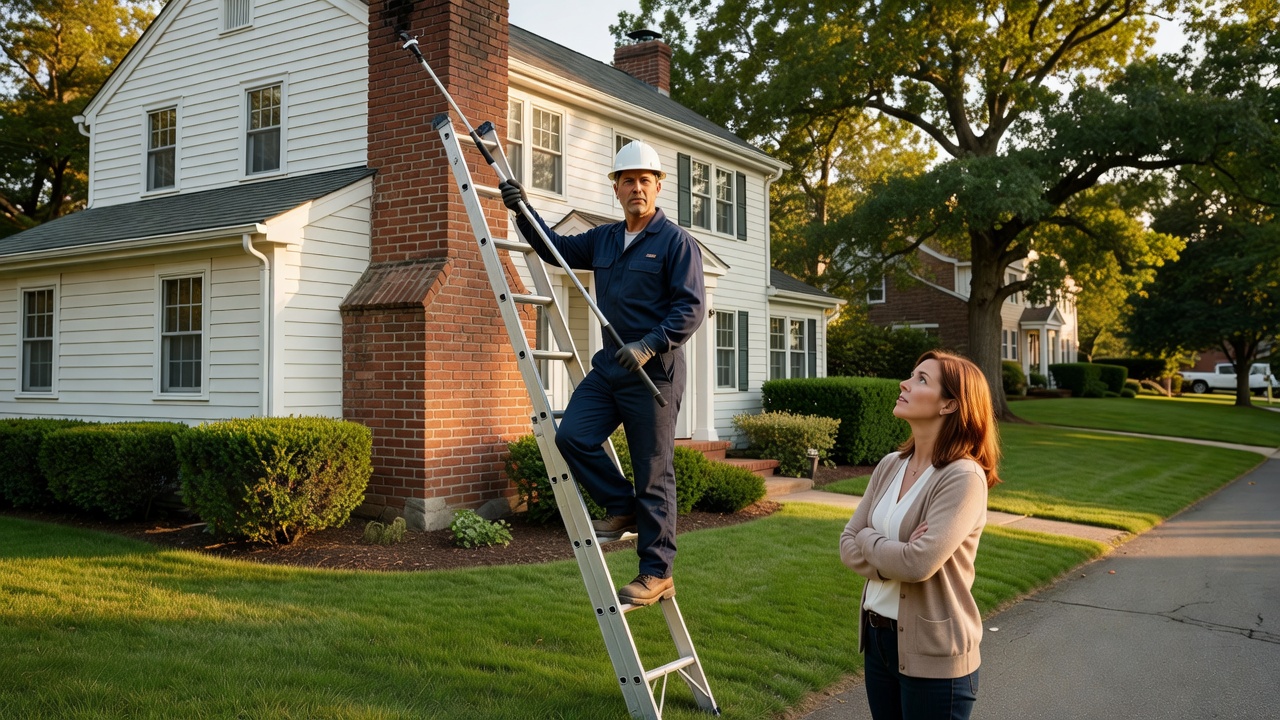
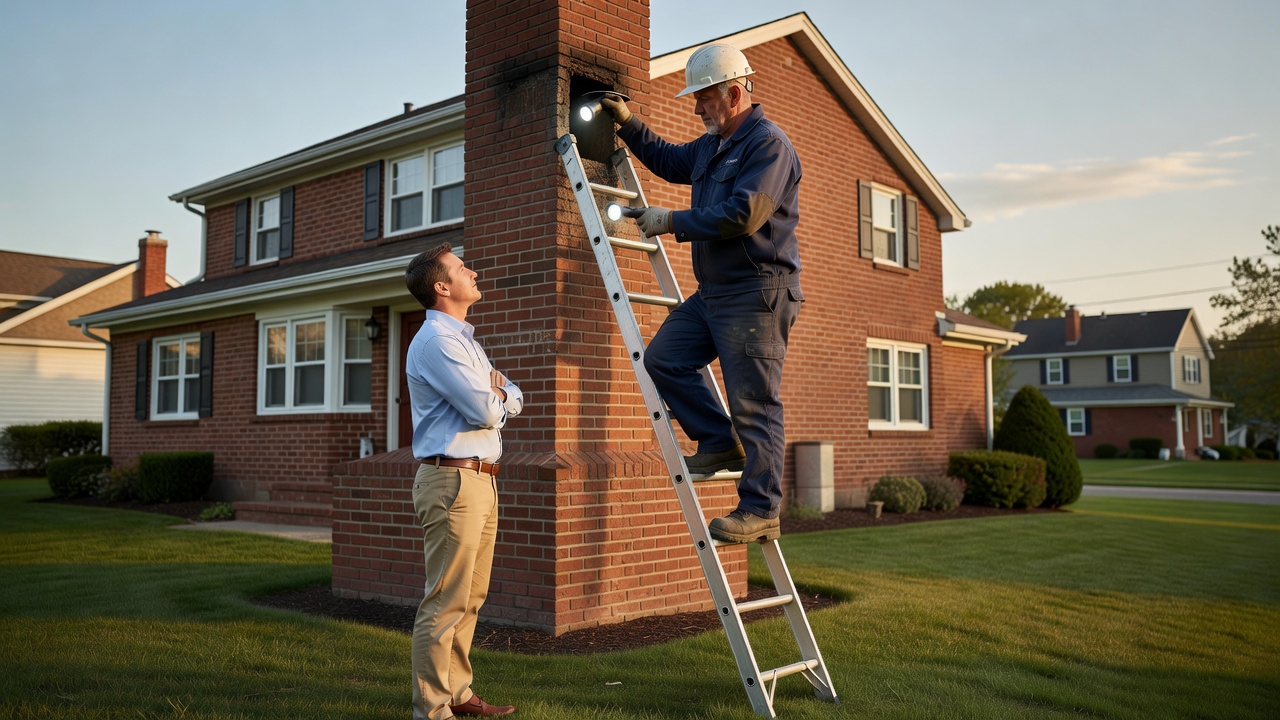
Can you show me the damage?
If a contractor recommends a major repair, ask for photographs, video footage when appropriate, or other documentation showing the condition that requires correction. CSIA specifically recommends internal video inspection after a chimney fire because damage may not be visible from the top or bottom of the chimney.
Do I need a permit for this work?
Do not rely on a blanket answer. Nassau County explains that local building authorities in the towns and villages are responsible for building permits, so requirements can vary by municipality. Ask the contractor which authority has jurisdiction over your property and whether the proposed work requires a permit.
What materials are you using?
Chimney masonry repairs require appropriate materials for the existing construction. Repointing with an incompatible mortar can contribute to masonry deterioration. Ask the contractor what mortar or repair material will be used and why it is appropriate for the existing brick.
Who will actually perform the work?
Tuckpointing, crown rebuilding, flue-liner installation, and firebox repairs involve different skills. Ask whether the person providing the estimate will perform the work or whether another crew or subcontractor will handle it.
What does the warranty cover?
Get warranty terms in writing. Ask how long workmanship is covered, what materials are covered, and what circumstances could void the warranty.
What happens if additional damage is discovered?
Chimney structures can reveal concealed problems once work begins. Your contract should explain what happens if the contractor discovers additional damage. Ideally, the contractor should stop, document the new condition, provide a revised estimate, and obtain your approval before expanding the scope of work.
Red Flags That Should Make You Pause
Be cautious when an unsolicited contractor approaches you after a storm or claims to have discovered serious chimney damage after only a brief visual inspection.
A recommendation for thousands of dollars in repairs should be supported by evidence. If someone says your liner is cracked, ask to see the damage. If they recommend a complete rebuild, ask what condition requires that level of work.
Pressure to approve a repair immediately is another reason to slow down. Major chimney work should be properly scoped, documented, and explained before you sign a contract.
Be cautious with vague estimates. A proposal that simply says “chimney repair” does not tell you enough about what you are buying. The written estimate should describe the work, materials, quantities when appropriate, price, and other important terms.
New York’s Attorney General also advises consumers to obtain a written contract for home-improvement work exceeding $500. The contract should identify the contractor, describe the work and materials, provide pricing, and include approximate start and completion information.
How to Compare Quotes Without Focusing Only on Price
Chimney repair costs can vary significantly because the scope of work varies. A crown repair is not comparable to a complete flue-liner replacement, and a small tuckpointing project is not comparable to rebuilding a chimney stack.
When comparing estimates in Greenvale and Roslyn, compare the scope line by line.
Ask each contractor to identify:
-
The exact repair being performed
-
The areas being repaired
-
The materials being used
-
The type and size of any replacement liner
-
Whether removal of existing materials is included
-
Whether cleanup and disposal are included
-
Whether permits are required
-
Whether inspections are included
-
The workmanship warranty
-
The total project price
Do not automatically choose the lowest number. A lower estimate may reflect a smaller scope of work, different materials, or services that another contractor included in its proposal.
Likewise, a higher estimate is not automatically better. The important question is whether the contractor can clearly explain the difference.
What a Professional Repair Process Should Look Like
A legitimate chimney repair project should begin with an evaluation of the existing system and a clear explanation of the problem.
The contractor should document significant defects, explain what repair is recommended, provide a written estimate, and clarify whether permits or additional inspections are necessary.
For larger repairs, keep copies of photographs, inspection reports, estimates, permits, invoices, and warranty documents. These records can be useful for future maintenance and if you eventually sell the property.
CSIA recommends annual inspection of chimneys, fireplaces, and vents, with cleaning, maintenance, and repairs performed when necessary.
Getting Started With an Honest Assessment
If your chimney has visible masonry damage, white staining, water intrusion, a damaged crown, or a flue problem identified during an inspection, do not choose a contractor based solely on the lowest quote.
Start with a qualified evaluation. Ask what inspection level is appropriate, request documentation of significant defects, verify the contractor’s Nassau County licensing status, and get the complete scope of work in writing before signing.
Ridgewood Chimney serves Greenvale, Roslyn, and surrounding Nassau County communities. Contact us to schedule an inspection and receive a clear assessment of your chimney’s condition before deciding what repairs, if any, are necessary.
Related from Greenvale Chimney: Chimney Repair in Greenvale, NY · Chimney Repair in Greenvale · Chimney Repair in Greenvale