Chimney Cap Installation in Greenvale, NY: Warning Signs You Need One Now and How to Find Someone Worth Hiring
Your chimney cap is a small component that does an important job. It helps keep rain, snow, and animals out of the flue while allowing combustion gases to escape. When the cap fails or was installed incorrectly, problems can develop quietly. By the time a homeowner notices a damaged liner, water inside the firebox, or animal debris in the flue, the original cap problem may have already caused additional damage.
For homeowners in Greenvale, Old Westbury, Roslyn, Brookville, and surrounding Nassau County communities, knowing the warning signs can help you address a cap problem before it becomes a larger repair. It also helps to know what a proper installation should look like and what questions to ask before hiring a contractor.
Warning Signs Your Chimney Cap Needs Attention
Visible Rust Streaks Running Down the Chimney
Orange or brown staining below the chimney crown can indicate that water is reaching metal components or moving through the masonry. A deteriorated galvanized cap may develop rust that eventually weakens the metal and allows more moisture into the system.
Water entering through the top of the chimney can contribute to deteriorating mortar, damaged flue components, and interior moisture problems.
Call a professional for an inspection. The staining itself does not prove the cap is the source, so the crown and flashing should be evaluated as well.
Pieces of Cap Material or Metal Mesh in the Firebox
Open the damper and look inside the firebox. If you find rust flakes, pieces of metal, or broken mesh that were not there previously, the chimney cap may be deteriorating.
A damaged mesh screen can also create an opening large enough for birds or other animals to enter the flue.
Have the chimney inspected before using the fireplace again.
Animal Sounds or Scratching Inside the Flue
Scratching, chirping, or movement above the damper can indicate that an animal has entered the chimney. This is more likely when a cap or mesh screen is missing or damaged.
Nesting material can obstruct the flue and may create a fire or ventilation concern. Some bird species are also protected under federal wildlife laws, so homeowners should not attempt to remove an active nest themselves.
Call a professional if you hear or see animal activity. A qualified technician can determine what is inside and explain the appropriate removal process.
Water Dripping into the Firebox After Rain
After heavy rain, check the firebox for visible moisture or dripping. Water entering the firebox can indicate a problem with the chimney cap, crown, flashing, or another part of the chimney assembly.
Greenvale receives substantial precipitation throughout the year, so repeated water entry should not be ignored. Moisture can contribute to deterioration of masonry and flue components over time.
Schedule an inspection if you find water inside the firebox.
White Staining on the Upper Chimney
White, chalky deposits on the exterior brick are known as efflorescence. They occur when moisture moves through masonry and carries soluble minerals toward the surface.
Efflorescence does not automatically mean the chimney cap has failed. However, it is evidence that moisture is moving through the masonry and deserves further evaluation.
Schedule an inspection, particularly if the staining is recurring or accompanied by cracking or deteriorated mortar.
A Cap That Tilts or Sits Unevenly
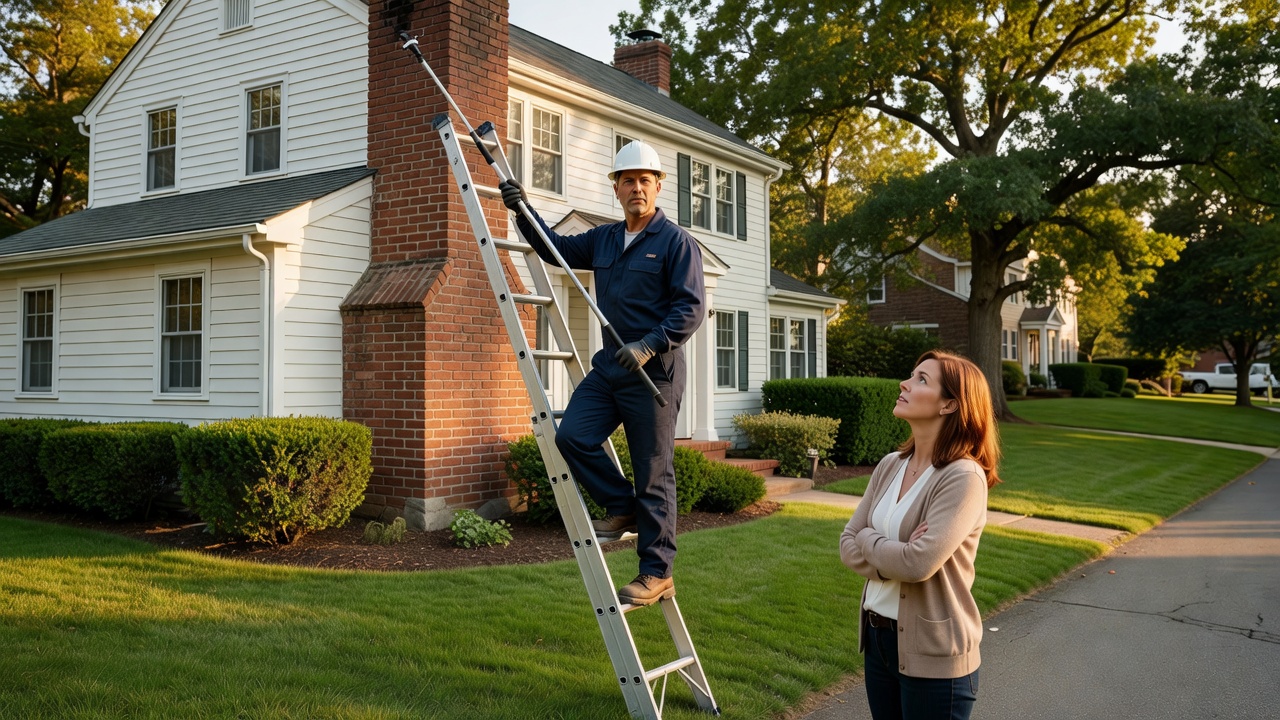
Look at the chimney from the ground with binoculars if necessary. A properly installed cap should sit securely and cover the intended opening.
A cap that is visibly tilted, loose, or separated from the chimney may have been improperly installed or shifted because of weather.
Have it professionally evaluated. A loose cap can allow water and animals into the flue and may eventually detach completely.
A Persistent Draft Coming from the Fireplace
Cold air entering through the fireplace when the damper is closed can have several possible causes. The damper itself may be damaged, the chimney configuration may contribute to the draft, or the cap and flue assembly may need evaluation.
This symptom alone does not prove that the chimney cap is undersized or improperly installed.
Have the system inspected rather than replacing the cap based on the draft alone.
A Musty or Damp Smell from the Fireplace
A persistent damp smell during warm weather can indicate moisture inside the chimney. Organic debris, creosote residue, and moisture can contribute to unpleasant odors that become noticeable when the house is closed up.
A properly fitted cap can help prevent rain and debris from entering from above, but the source of the moisture should be identified before any replacement is recommended.
Schedule an inspection if the odor persists.
What Proper Chimney Cap Installation Looks Like
For a standard single-flue chimney in the Greenvale area, chimney cap installation may cost approximately $250 to $600 installed, depending on the flue dimensions, material, accessibility, and condition of the crown.
A basic installation should begin with an assessment of the existing chimney. The technician should measure the flue opening, inspect the crown, determine the appropriate cap dimensions, and identify any problems that could affect installation.
Common cap materials include galvanized steel, stainless steel, and copper. Stainless steel generally provides better long-term corrosion resistance than galvanized steel, while copper is a premium option with a different appearance and price point.
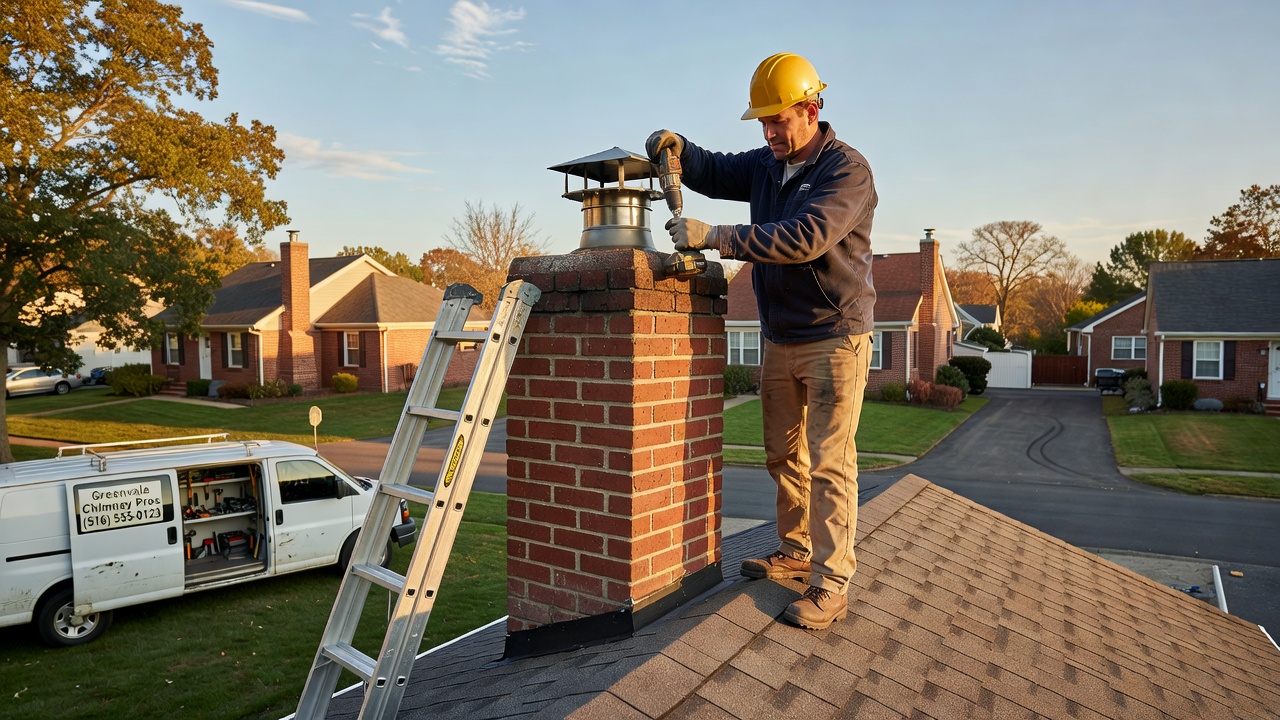
The cap should be securely fastened according to the chimney and cap design. The installation should also provide adequate clearance for the flue opening and allow combustion gases to exit properly.
If the crown is cracked or deteriorated, that condition should be addressed before or as part of the cap installation when necessary. Installing a new cap does not repair a damaged crown.
What Should Be Included in the Quote?
Before approving the work, ask the contractor to specify exactly what you’re paying for.
A standard cap installation may include:
- Measuring the flue opening
- Inspecting the crown and visible masonry
- Supplying the specified chimney cap
- Installing and securing the cap
- Checking the completed installation
Depending on the company, these may be separate services:
- Crown repair or rebuilding
- Chimney cleaning
- Interior flue inspection
- Flashing repair
- Masonry repair
- Animal or nest removal
- Replacement of damaged flue components
A written estimate should identify the cap material, dimensions, installation method, and any additional work recommended.
Questions to Ask Before Hiring a Contractor
The technician’s credentials matter because chimney cap installation is not simply a matter of placing a piece of metal over the flue.
Ask whether the technician is CSIA-certified and whether the certification applies to the person who will actually perform the work. You can also ask for proof of appropriate liability and workers’ compensation insurance.
Ask whether the technician will inspect the crown before installing the cap. If a contractor gives you a firm installation price without seeing the chimney or determining the flue dimensions, ask how that price was calculated.
You should also ask:
- What material is the cap made from?
- What gauge or thickness is the material?
- Is the cap custom-fabricated or a standard size?
- How will it be secured?
- Is crown repair included if damage is discovered?
- What warranty comes with the cap and installation?
- Are there any additional charges that could arise during the job?
A reputable contractor should be able to answer these questions clearly.
Red Flags When Comparing Chimney Cap Companies
Be cautious if a contractor gives you a price without asking about the flue size or chimney configuration.
Other warning signs include a demand for full payment before the work begins, no written estimate, unclear material specifications, or pressure to approve unrelated repairs immediately.
A contractor who recommends replacing the cap without examining the crown may also be overlooking part of the water-management system.
The cheapest quote is not necessarily the best value. A properly fitted stainless steel cap installed after the chimney has been evaluated may cost more upfront than a generic cap, but the important comparison is the quality and scope of the work.
One Simple Way to Avoid Overpaying
Get at least two written estimates when practical and ask both contractors to quote the same scope.
Have each one identify the cap material, installation method, crown condition, warranty, and any recommended additional work. This lets you compare the actual service rather than simply comparing two numbers.
If one contractor recommends replacing the cap and another recommends crown repair first, ask each one to explain the evidence behind the recommendation. Photos can be particularly useful when the chimney is difficult to inspect from ground level.
Serving Greenvale and the North Shore
Ridgewood Chimney serves homeowners throughout Greenvale, Old Westbury, Roslyn, Brookville, and surrounding Nassau County communities.
If you’ve noticed rust, water inside the firebox, animal activity, efflorescence, or a damaged chimney cap, contact us for a free inspection. We’ll assess the cap, crown, and visible chimney components and explain what actually needs attention.
The goal is simple: identify the problem before water, animals, or weather turn a relatively straightforward cap replacement into a much larger chimney repair.
Related from Greenvale Chimney: Chimney Repair in Greenvale, NY · Chimney Repair in Greenvale