How to Get Chimney Flashing Repair Right Before Greenvale’s Wet Season Costs You More
Water damage around a chimney rarely starts with a major leak. More often, it begins with a small gap in the chimney flashing that allows rainwater to enter little by little until it causes significant damage.
For homeowners in Greenvale, Brookville, and throughout Nassau County’s North Shore, chimney flashing is one of the most important components protecting both the roof and the chimney. Repairing damaged flashing before the fall rainy season can help prevent expensive structural repairs, mold growth, and interior water damage.
Here’s what every homeowner should know about chimney flashing repair and why timing matters.
Understand What Chimney Flashing Does
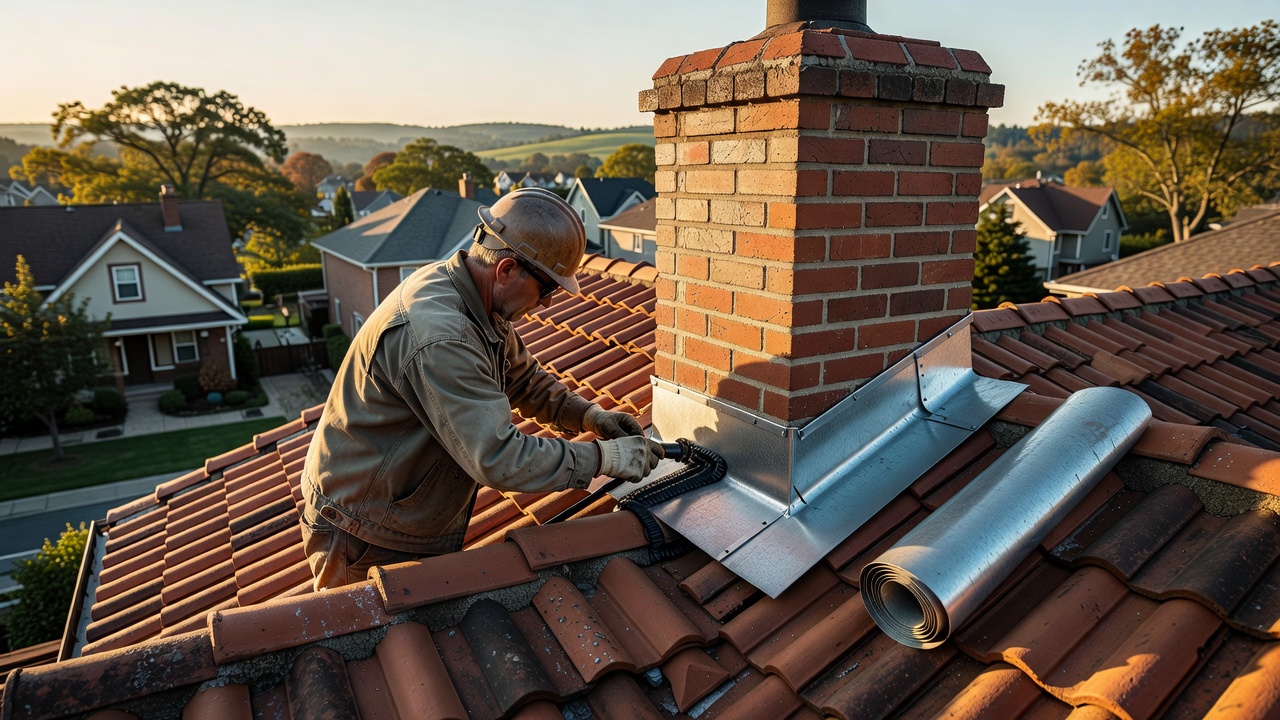
Chimney flashing is the metal barrier installed where the chimney meets the roof.
Its purpose is to create a waterproof seal that prevents rain from entering the home.
Most chimney flashing systems consist of two primary components:
- Base flashing, which rests against the roof surface.
- Counter flashing (step flashing), which is embedded into the chimney masonry or integrated with the roofing system.
When either section fails, water can penetrate beneath the roofing materials and into the home’s structure. While applying roof sealant may temporarily slow a leak, deteriorated or improperly installed flashing usually requires complete replacement rather than another layer of caulk. Because chimney flashing connects both the roofing system and the masonry chimney, repairs should be completed by professionals familiar with both systems.
Step 1: Schedule Your Inspection Before the Rainy Season
For homeowners in Greenvale and Brookville, the best time to schedule a chimney flashing inspection is late August through mid-October.
Scheduling early provides several advantages:
- Dry weather for repairs
- Better contractor availability
- Time to complete repairs before freezing temperatures
- Reduced risk of winter water damage
By late fall, many chimney companies are fully booked, and colder temperatures make certain masonry repairs more difficult.
Waiting until spring can also become costly. Water entering through damaged flashing during winter may eventually damage the chimney crown, mortar joints, roof decking, drywall, insulation, and interior finishes. Repairing flashing early often prevents much larger structural repairs later.
Step 2: Perform a Safe Ground-Level Inspection
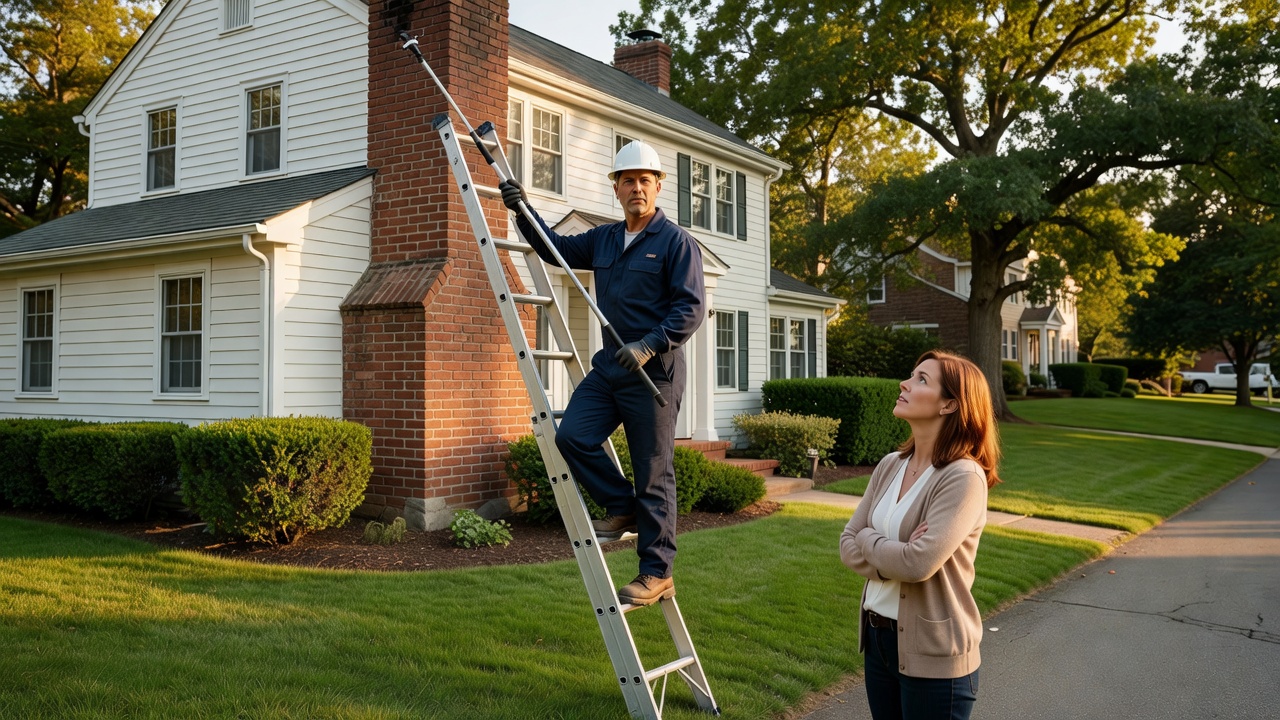
Homeowners can perform a basic visual inspection without climbing onto the roof.
Using binoculars, look for:
- Rusted flashing
- Lifted metal edges
- Missing sealant
- Cracked caulking
- Water stains on the chimney exterior
Inside your home, inspect ceilings and walls near the fireplace for:
- Water stains
- Soft drywall
- Peeling paint
- Musty odors
Any of these warning signs justify scheduling a professional chimney inspection.
Step 3: Schedule a Professional Chimney Inspection
According to NFPA 211, chimneys should be professionally inspected every year.
A CSIA-certified chimney technician can determine whether the problem involves:
- Base flashing
- Step flashing
- Counter flashing
- Sealant failure
- Masonry deterioration
Many homes throughout Greenvale and Brookville feature older masonry chimneys combined with steep rooflines that require custom-fabricated flashing. A detailed inspection report with photographs also makes it easier to compare repair estimates from different contractors.
Step 4: Understand What a Proper Repair Includes
Quality chimney flashing repair involves much more than applying new sealant.
A professional repair typically includes:
- Removal of damaged flashing
- Cleaning the chimney masonry
- Installing new flashing
- Properly embedding counter flashing into mortar joints
- Applying professional-grade chimney sealant
Depending on homeowner preferences and budget, flashing materials may include:
- Aluminum
- Galvanized steel
- Copper
Copper flashing generally has the longest lifespan and is often selected for higher-end homes. Most standard chimney flashing repairs require between two and four hours to complete. If a contractor recommends simply covering the existing flashing with additional caulk, consider obtaining a second opinion.
Step 5: Know the Typical Repair Costs
For most homes in Greenvale and Brookville, chimney flashing repair typically ranges between $350 and $750.
More extensive repairs involving:
- Steep roofs
- Custom flashing fabrication
- Mortar joint reconstruction
- Chimney crown repairs
may increase total costs to approximately $900 to $1,400.
Large custom homes requiring copper flashing may exceed $1,800, although properly installed copper flashing often lasts for several decades. By comparison, interior water damage caused by neglected flashing commonly results in repair costs ranging from $1,500 to $4,000 or more. Routine maintenance is almost always the more economical option.
Step 6: Complete Repairs Before Freezing Temperatures
Masonry repairs require suitable weather conditions for proper curing. Most chimney flashing installations involving mortar should be completed while temperatures remain consistently above 40°F.
For homeowners in Nassau County, this generally means completing repairs before late October or early November whenever possible. Scheduling early helps avoid delays caused by seasonal demand and changing weather.
Step 7: Verify the Completed Work
After repairs are finished, ask the contractor to provide photographs showing:
- Newly installed base flashing
- Counter flashing embedded into the mortar joints
- Completed roof connections
Many homeowners also perform a simple water test by gently spraying the roof area above the chimney while checking inside for signs of moisture. A reputable contractor should welcome this final verification.
Don’t Ignore Old Water Stains
One of the most common misconceptions about chimney leaks is assuming that a dry water stain indicates the problem has been resolved. In reality, chimney flashing leaks are often intermittent.
Water may only enter the home during certain wind conditions or heavy rainfall, allowing stains to dry between storms while the underlying leak continues.
If you notice discoloration near your chimney, have the flashing professionally inspected even if the area appears dry.
Schedule a Chimney Flashing Inspection in Greenvale
Small chimney flashing problems rarely remain small for long. Scheduling an inspection before the rainy season helps protect your roof, chimney, and interior from expensive water damage while providing enough time to complete repairs under favorable weather conditions.
Ridgewood Chimney proudly serves homeowners throughout Greenvale, Brookville, and surrounding Nassau County communities.
Our CSIA-certified technicians provide comprehensive chimney inspections, professional flashing repairs, and detailed written recommendations based on your chimney’s actual condition.
Contact Ridgewood Chimney today to schedule your free chimney inspection and make sure your chimney is ready before the next season of rain and freezing weather arrives.
Related from Greenvale Chimney: Chimney Repair in Greenvale, NY · Chimney Repair in Greenvale, NY