What Chimney Masonry Repair Actually Costs in Greenvale, NY
Chimney masonry repair costs depend on the extent of the damage, the height of the chimney, access to the work area, and the materials required. A small mortar repair can be relatively straightforward, while extensive brick deterioration or a partial rebuild can require considerably more labor and materials.
For homeowners in Greenvale, NY, the most useful starting point is understanding what each type of repair involves and what should be included in the estimate. Published New York repair guides show that costs can range from several hundred dollars for limited repairs to several thousand dollars for extensive masonry work. These are broad planning figures, not verified quotes for every Greenvale property.
A Realistic Starting Point for Budgeting
The price of chimney masonry repair varies according to the work required. Limited repointing may cost substantially less than replacing multiple courses of damaged brick. Crown repairs, flashing work, and larger masonry projects have different labor and material requirements.
As a broad budgeting guide, some published New York cost guides list smaller chimney repairs in the hundreds of dollars, while more extensive repairs and rebuilds can reach several thousand dollars or more. The final price depends on the chimney’s condition, dimensions, accessibility, and the contractor’s proposed repair method.
These estimates should not replace an inspection and written quote. Before comparing prices, confirm that each contractor is estimating the same work and using comparable materials.
What Drives Chimney Masonry Repair Costs Up or Down?
1. The Extent of the Damage
The size and severity of the damaged area are among the main factors affecting repair costs.
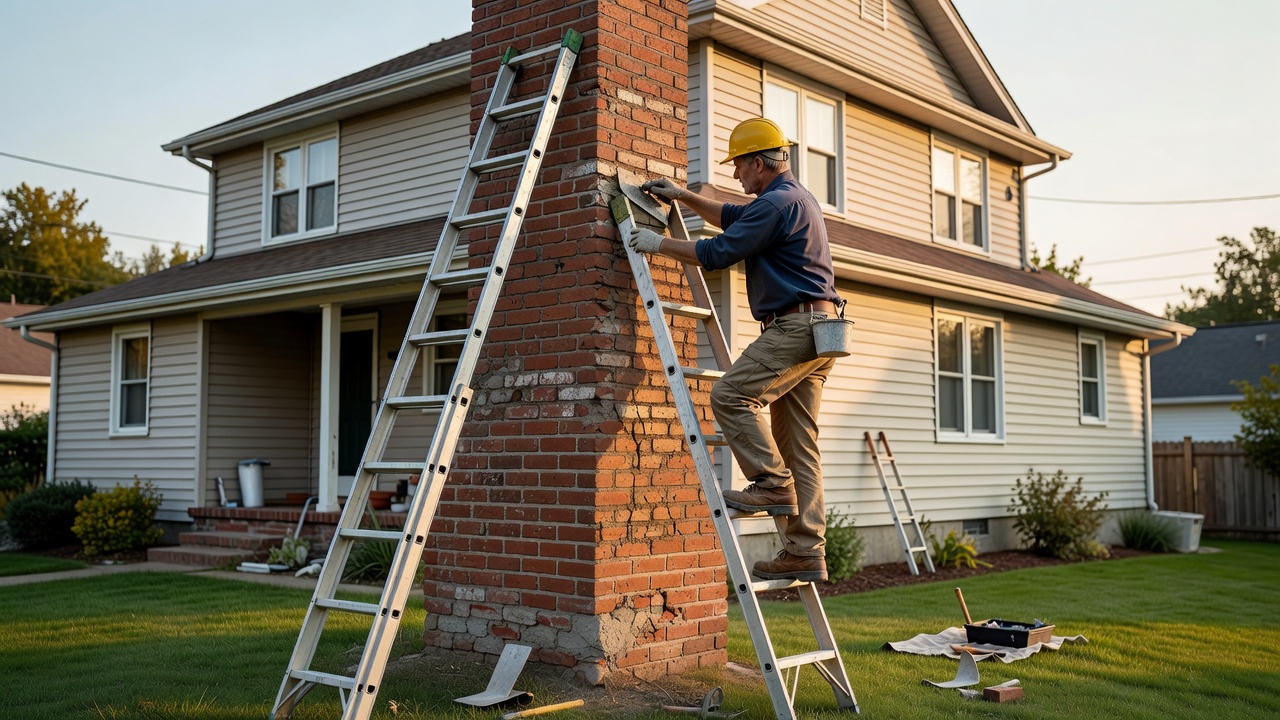
Repointing a limited number of mortar joints is different from removing and replacing deteriorated bricks across several courses. If the damage extends beyond the visible surface, additional work may be necessary.
Ask the contractor to identify the affected areas and explain why the proposed repair is appropriate. A detailed scope helps you understand whether the estimate covers a localized repair or a more extensive restoration.
2. Chimney Height and Accessibility
Chimneys that extend above multiple roof levels may require additional setup, access equipment, or scaffolding. Roof pitch, surrounding structures, and the location of the damaged masonry can also affect how easily workers can reach the repair area.
A lower chimney with accessible damage may require less setup than a taller stack that needs specialized access. Ask whether equipment rental, scaffolding, and site preparation are included in the estimate.
3. Brick and Mortar Selection
The materials used in the repair affect both cost and long-term performance. Matching existing brick can take additional time if the original size, color, texture, or profile is difficult to source.
Mortar selection also matters. The replacement mortar should be compatible with the existing masonry rather than chosen solely because it is strong or inexpensive. This is particularly important when repairing older brickwork, where an unsuitable mortar can damage the surrounding masonry.
Ask which brick and mortar products the contractor plans to use and how the materials will match the existing chimney.
4. Chimney Crown Condition
The chimney crown covers the top of a masonry chimney around the flue and helps direct water away from the structure. Cracks or deterioration can allow moisture to enter the masonry.
The appropriate repair depends on the crown’s condition. Some defects may be suitable for localized repair, while extensive deterioration may require rebuilding the crown.
If crown work is included with repointing or brick replacement, ask for the cost of each component separately. That makes it easier to understand the overall price and compare estimates.
5. Flashing and Water Intrusion
Flashing seals the area where the chimney meets the roof. Damaged or poorly sealed flashing can allow water to enter the building, sometimes creating symptoms that resemble masonry problems.
If an inspection identifies both damaged masonry and flashing concerns, the estimate should explain whether the work includes both. Repairing brickwork without addressing a separate source of water intrusion may leave the underlying problem unresolved.
Ask the contractor to identify the source of any reported moisture and distinguish necessary repairs from optional improvements.
6. Previous Maintenance and Hidden Damage
A chimney that has experienced prolonged moisture intrusion or years of deterioration may need more extensive repairs than one with localized damage. However, the amount of work required cannot be determined reliably from age alone.
An inspection helps establish the visible condition and whether additional investigation is needed. If concealed damage is discovered during the work, ask the contractor to document it and provide a revised scope and price before proceeding with additional work.
What’s Included in a Chimney Masonry Repair Quote?
A written estimate should clearly identify the work being performed, the materials involved, and any services that are excluded.
Depending on the project, a masonry repair quote may include:
-
Inspection of accessible areas to establish the repair scope.
-
Removal of loose or deteriorated mortar.
-
Repointing or replacement of damaged masonry.
-
Repair or rebuilding of the chimney crown, if included.
-
Cleanup of the work area.
-
A description of the completed work and any remaining concerns.
Other services may be quoted separately. These can include chimney cap replacement, flashing repair, waterproofing, flue liner work, or repairs to the firebox.
Do not assume that every service is included simply because the proposal says “chimney repair.” Ask the contractor to itemize the work and explain any exclusions, warranties, and potential additional costs.
When Is the Best Time to Schedule Masonry Repairs?
Masonry repairs should be scheduled when the chimney’s condition calls for attention, with weather conditions considered during planning.
Mortar work requires suitable temperatures and protection while the material cures. Masonry industry guidance identifies temperatures below 40°F as a situation that can require special cold-weather procedures and protection. Work may still be possible in colder conditions, but the contractor must follow appropriate material and installation requirements.
That is one reason to plan ahead before winter weather arrives. However, visible cracks, loose masonry, or signs of water intrusion should not be ignored simply because the season is changing.
NFPA 211 guidance recommends inspecting chimneys, fireplaces, and vents at least once a year, with cleaning, maintenance, and repairs performed when necessary. An annual inspection is a useful starting point, but the need for masonry repair depends on the actual findings.
How to Avoid Overpaying for Chimney Masonry Repair
Comparing written estimates is one of the best ways to understand the proposed work and identify differences in price.
Before choosing a contractor, consider these steps:
-
Request itemized estimates. Make sure each quote identifies the damaged areas, proposed repairs, materials, and labor.
-
Compare the scope, not just the total. One estimate may include crown work or flashing repairs that another excludes.
-
Ask about mortar and brick compatibility. The materials should be suitable for the existing masonry.
-
Clarify the warranty. Ask what the warranty covers, how long it lasts, and whether any exclusions apply.
-
Verify credentials and insurance. Confirm the contractor’s applicable licensing and insurance before work begins.
-
Request documentation of additional damage. If the contractor finds a problem outside the original scope, ask for an explanation and revised estimate before authorizing extra work.
In Nassau County, residential home-improvement contractors performing covered work, including chimney repairs and masonry work, are subject to county licensing requirements. Homeowners can verify a contractor’s status through the Nassau County Department of Consumer Affairs.
A low initial price does not necessarily mean the work offers better value. A clear scope, suitable materials, and documented repairs make it easier to evaluate what you are paying for.
Schedule a Chimney Masonry Assessment in Greenvale, NY
Cracked mortar, deteriorating bricks, damaged crowns, and signs of water intrusion are reasons to arrange a professional assessment. The right repair depends on the condition of the masonry and whether related components also need attention.
Ridgewood Chimney offers chimney services in Greenvale and across Nassau County. Contact the company to ask about inspection availability, pricing, and the scope of its masonry repair services. Request a written estimate before authorizing the work, so you understand the proposed repairs and any additional costs.
Related from Greenvale Chimney: Chimney Repair in Greenvale, NY · Chimney Repair in Greenvale · Chimney Repair in Greenvale