What Greenvale and Roslyn Homeowners Should Actually Do Before Calling a Chimney Sweep
Before calling a chimney sweep in Greenvale or Roslyn, there are a few things homeowners can safely do themselves. You can gather your service records, check the fireplace and damper from inside the home, look at the chimney from the ground, and note any changes in smoke, odors, or fireplace performance.
What you should not do is climb onto the roof, attempt to clean the flue yourself, or assume that a visible problem tells you everything about the condition of the chimney.
The goal is simple: handle the basic observations yourself, then give a qualified chimney professional the information they need to determine whether cleaning, inspection, or repairs are actually necessary.
Before You Start: Know What You Can About Your Chimney
Start by looking for your previous inspection and cleaning records.
If you know when the chimney was last inspected, what type of appliance it serves, and whether any repairs have been performed, tell the chimney professional when you schedule the appointment.
If you do not have those records, that does not automatically mean your chimney requires a Level 2 inspection. The appropriate inspection level depends on the chimney’s condition and circumstances.
CSIA follows NFPA 211 guidance recommending that chimneys, fireplaces, and vents be inspected at least once a year, with cleaning, maintenance, and repairs performed when necessary. (CSIA)
A Level 2 inspection is more extensive than a routine Level 1 inspection and may be appropriate after certain changes to the system, a property transfer, a chimney or building fire, relining, certain external events, or a potentially damaging malfunction. (CSIA Level 2 guidance)
Step 1: Look Inside the Firebox
You can perform a basic visual check from inside the fireplace.
Use a flashlight to look for obvious debris, nesting material, damaged components, or excessive deposits. You can also confirm that the damper is open before using the fireplace.
CSIA specifically recommends looking up into the fireplace with a flashlight to confirm that the damper is fully open before lighting a fire. (CSIA)
Do not assume that being able to see clean-looking brick means the chimney itself is clean.
The chimney flue and smoke chamber extend beyond what you can see from the firebox, and a complete chimney sweeping includes those areas. (CSIA homeowner guide)
If you see heavy or glazed deposits, significant debris, damaged flue material, or an obstruction, have the chimney evaluated before using the fireplace.
Step 2: Check the Chimney From the Ground
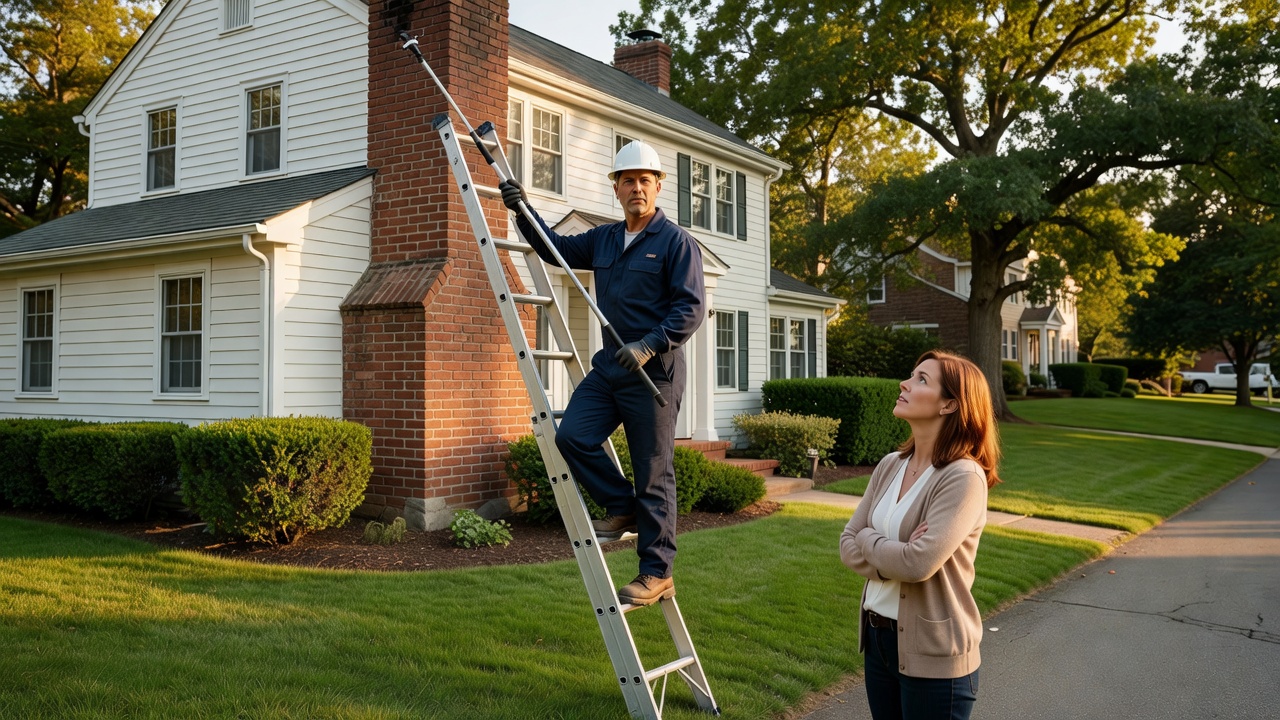
You can inspect the chimney visually without getting onto the roof.
Use binoculars if necessary and look for obvious signs such as:
- A missing or visibly damaged cap
- Cracked or deteriorated masonry
- Visible damage around the chimney crown
- A displaced or damaged rain cap
- Vegetation or debris around the chimney top
CSIA identifies cracked exterior masonry, damaged rain caps, warped components, and creosote debris among conditions that can warrant professional attention. (CSIA)
Do not climb onto the roof to investigate these issues yourself.
A professional can safely access the chimney and determine whether what you see from the ground represents a cosmetic issue or something that requires repair.
Step 3: Remove Fireplace Ashes Safely
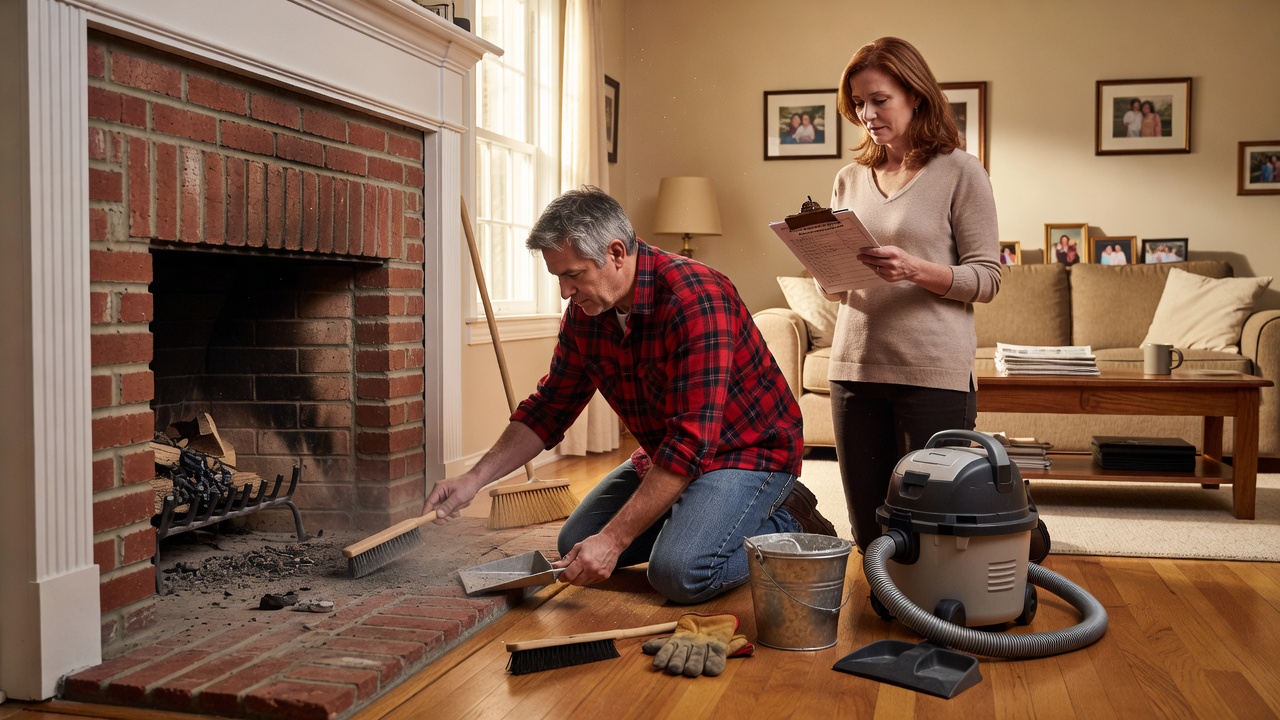
Removing cooled fireplace ashes is a reasonable homeowner maintenance task.
Do not rely on a fixed number of hours or a specific ash depth as a universal rule. Fireplace conditions vary, and embers can remain hot longer than expected.
The U.S. Fire Administration recommends placing cooled ashes in a metal container with a tight-fitting lid and keeping the container at least 10 feet away from the home and other combustible structures. (USFA)
Never put fireplace ashes directly into a combustible trash container.
What homeowners should not attempt is cleaning creosote from the chimney flue.
CSIA explains that standard chimney cleaning uses brushes and a properly filtered vacuum, while hard creosote or glaze may require specialized mechanical cleaning equipment. CSIA specifically recommends that this type of mechanical cleaning be performed by professional sweeps familiar with the equipment. (CSIA homeowner guide)
Step 4: Test the Damper
Before using the fireplace, operate the damper manually.
It should move as designed and be fully open before a fire is lit.
A damper that sticks, will not open properly, or appears damaged should not be forced. Have it evaluated by a chimney professional.
CSIA notes that a malfunctioning damper can contribute to smoke entering the room and can create a safety problem if it is closed when a fire is burning. (CSIA)
A damper problem may be a relatively simple repair, but the appropriate solution depends on the type and condition of the damper.
Step 5: Know When to Call a CSIA-Certified Sweep
This is where the homeowner’s role ends and professional evaluation begins.
A qualified chimney professional can perform the appropriate inspection, clean the chimney when necessary, and identify problems that are not visible from the firebox.
CSIA recommends using CSIA Certified Chimney Sweeps because the certification process tests professionals on chimney and venting systems. (CSIA)
When scheduling service, ask:
- Who will perform the inspection?
- Is the technician CSIA certified?
- What inspection level is being recommended?
- Does the service include chimney sweeping?
- Will you receive documentation of the findings?
- If repairs are recommended, will you receive a written estimate?
You should not need to guess what service you are paying for.
Step 6: Understand What the Sweep Is Actually Checking
A complete chimney sweeping is more than cleaning the visible firebox.
CSIA says a complete sweeping includes the chimney flue and smoke chamber. Depending on the system, the professional may also evaluate accessible components such as the damper, chimney exterior, cap, crown, and other parts of the venting system. (CSIA homeowner resources)
The inspection level matters.
A Level 1 inspection is the basic inspection when the chimney and venting system can be adequately evaluated under its existing conditions.
A Level 2 inspection provides a more extensive evaluation and includes video scanning of the flue when required by the inspection procedure. It can be appropriate when the appliance or fuel changes, a property changes hands, the chimney has been relined, a chimney or building fire has occurred, certain external events may have caused damage, or an operating malfunction may have damaged the system. (CSIA Level 2 guidance)
That means a home sale does not have to be treated as an automatic camera inspection without considering the circumstances.
Step 7: Read the Report Before Approving Repairs
If the technician recommends additional work, ask for an explanation of what was found.
Questions worth asking include:
What exactly is damaged?
How was the problem identified?
Is the fireplace safe to use right now?
Does the recommended repair need to happen immediately?
Would a more detailed inspection provide additional information first?
If the technician provides photographs or video from an inspection, ask to see the relevant areas.
A written report is particularly useful when the recommended work involves a liner, masonry, crown, cap, or other significant repair.
What If Your Fireplace Smokes Into the Room?
Do not automatically assume that smoke means the chimney simply needs cleaning.
Draft problems can have several causes, including chimney configuration, weather, house pressure, appliance characteristics, and obstructions.
The EPA explains that exhausting air from a home through kitchen hoods, bathroom fans, clothes dryers, and other systems can depressurize the building enough to pull combustion products back down a chimney or flue. (EPA)
That means opening a window can sometimes change the symptoms, but it does not prove that the chimney is clean or that there is no underlying problem.
If smoke repeatedly enters the home, stop using the fireplace and have the system evaluated.
If you suspect carbon monoxide exposure, get outside to fresh air and follow emergency guidance rather than attempting to diagnose the chimney yourself. (EPA)
What About the Cost?
There is no reliable universal price for chimney cleaning or inspection in Greenvale and Roslyn.
The cost depends on the chimney configuration, inspection level, accessibility, amount and type of deposits, number of flues, and whether additional work is necessary.
A straightforward Level 1 inspection and cleaning is different from a Level 2 inspection involving additional examination of the chimney interior.
Similarly, repairing a damaged liner or masonry is completely different from replacing a chimney cap.
Instead of relying on an advertised price alone, ask what is included and request an itemized estimate if additional work is recommended.
The Bottom Line for Greenvale and Roslyn Homeowners
You can do some useful preparation before calling a chimney sweep.
Check your records. Look inside the firebox. Confirm that the damper operates. Look at the chimney from the ground. Remove cooled ashes safely.
Then stop there.
Do not climb onto the roof, clean the flue yourself, attempt to repair a liner, or assume that a clean-looking firebox means the entire chimney is safe.
A qualified chimney professional can determine whether you need a routine inspection, cleaning, a more detailed Level 2 evaluation, or repairs.
The objective is not to turn every chimney visit into a major project.
It is to find out what your chimney actually needs before you rely on it for another season.
Related from Greenvale Chimney: Chimney Repair in Greenvale, NY · Chimney Repair in Greenvale