Chimney Flashing Repair in Greenvale and Roslyn: What’s Actually Going Wrong and How It Gets Fixed
Water stains on your ceiling near the fireplace are easy to ignore until the drywall starts to bubble or discolor. By then, what may have started as a flashing problem can involve additional moisture damage.
For homeowners in Roslyn, Greenvale, and nearby Nassau County communities, chimney flashing is an important part of keeping water out where the roof meets the chimney. This area is especially vulnerable because the chimney and roofing materials move differently as temperatures change.
Here is what can go wrong with chimney flashing, how a trained technician can identify the source, and what homeowners should expect during the repair process.
Step Flashing That Has Pulled Away From the Masonry
What you may notice:
You might notice water stains around the chimney area, damp odors, or signs of moisture inside the home after heavy rain.
What may be happening:
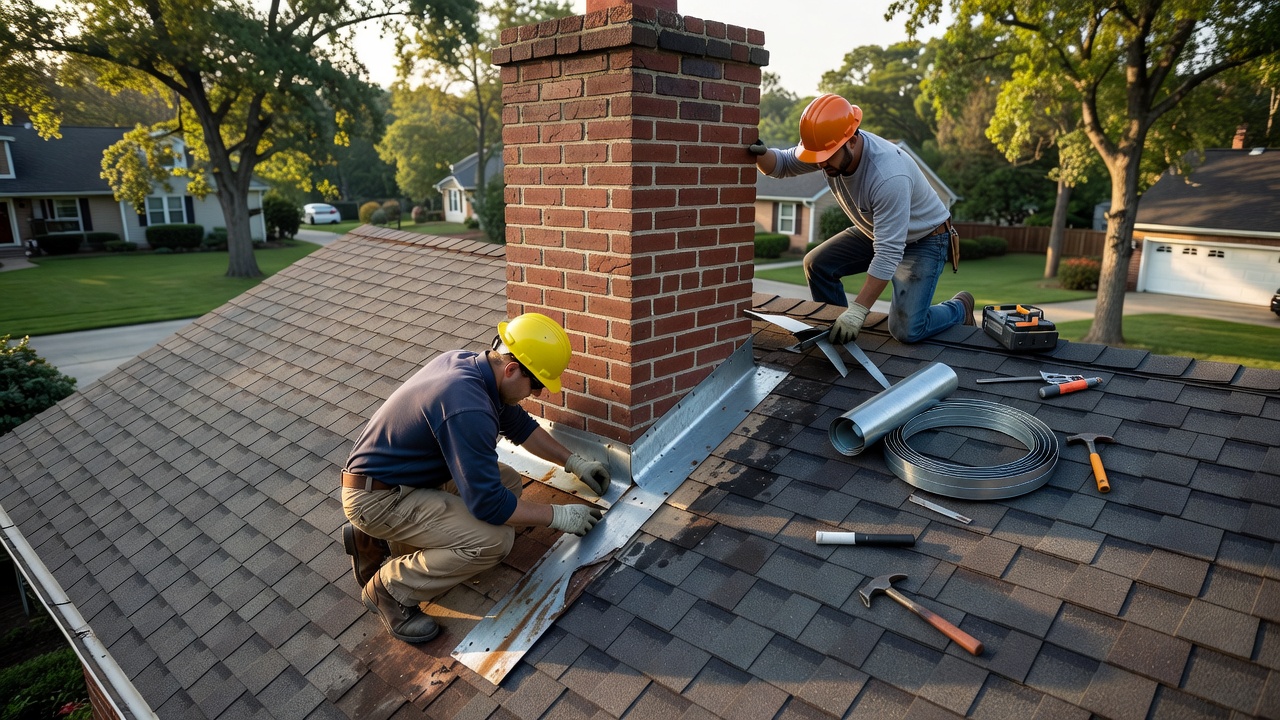
Step flashing consists of individual pieces of metal installed where the chimney meets the roof. These pieces work with counter-flashing to help direct water away from the chimney and roofing system.
Over time, mortar joints can deteriorate. Flashing can also corrode, shift, or become separated from the masonry.
Older homes may have flashing installations that have been repaired several times. Previous roofing or masonry work can also affect how well the flashing performs.
The diagnostic step:
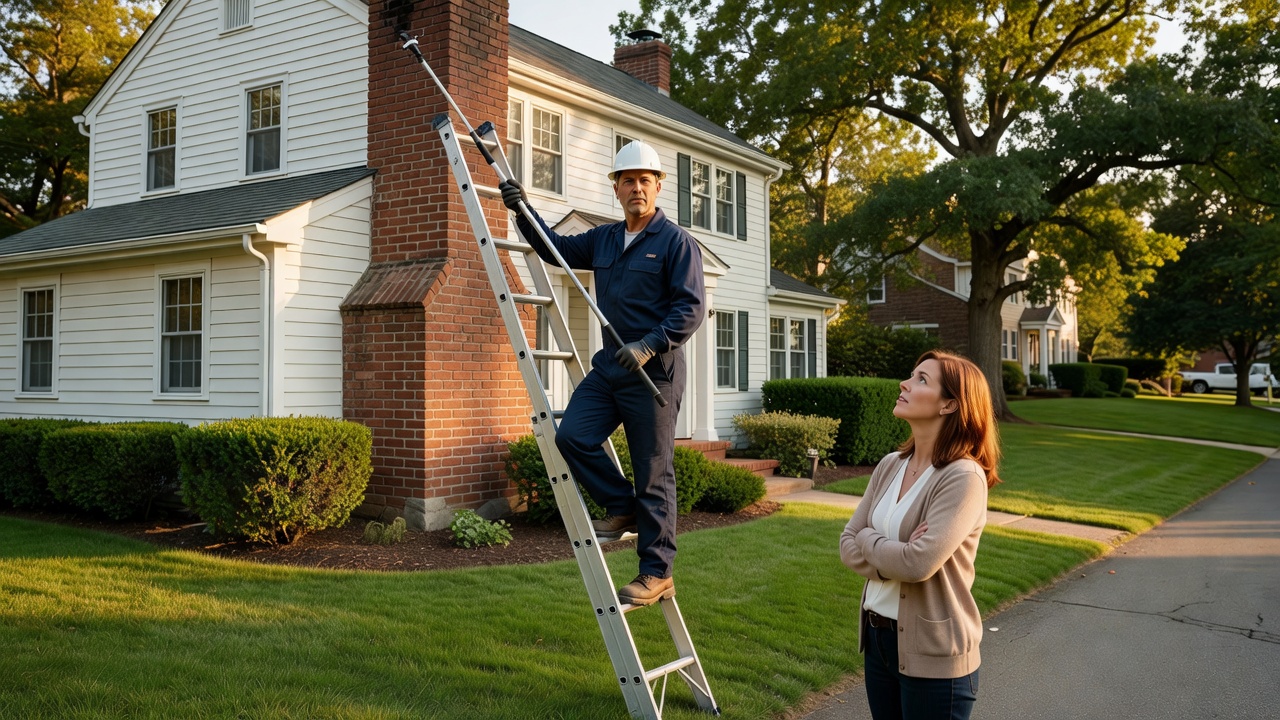
A technician should inspect the flashing from the roof level rather than relying only on what can be seen from the ground.
Controlled water testing may also be used when appropriate to help identify the source of an active leak. This can help distinguish a flashing problem from issues involving the chimney crown, cricket, or other roof components.
The repair:
Depending on the condition, the repair may involve resetting or replacing damaged flashing and properly integrating the counter-flashing with the masonry.
The final cost depends on the chimney size, accessibility, amount of damaged flashing, and materials required.
Failed Saddle or Cricket Behind a Wide Chimney
What you may notice:
Water staining may appear near the back of the chimney or on the uphill side of the roof.
What may be happening:
A chimney cricket or saddle can help divert water around the back of a wider chimney. Its design and installation depend on the chimney and roof configuration.
Older crickets can deteriorate over time. Roofing work or previous chimney repairs may also leave the area improperly sealed.
The repair:
A damaged cricket may need to be repaired or rebuilt so that it properly integrates with the roofing and flashing system.
The materials can vary. Galvanized steel, aluminum, copper, and other suitable materials may be used depending on the roof and existing flashing.
This type of repair is more involved than simply applying another layer of caulk.
Caulk-Only Flashing That Has Cracked
What you may notice:
The chimney may leak only during certain storms. This can make the source difficult to identify.
What may be happening:
Sealant is sometimes used as a quick repair around flashing. While sealant can have an appropriate role in a flashing system, it should not automatically be treated as a substitute for properly installed metal flashing.
Outdoor sealants can deteriorate from weather exposure and temperature changes. Once they crack or separate, water may find a path into the roof assembly.
The diagnostic step:
A technician should determine whether functional flashing exists underneath the sealant.
If the underlying flashing is intact, the repair may be more limited. If the sealant is effectively being used as the primary barrier, more extensive flashing work may be necessary.
Galvanic Corrosion Between Dissimilar Metals
What you may notice:
Look for rust-colored streaks, pitting, discoloration, or visibly deteriorated flashing.
What may be happening:
Certain combinations of dissimilar metals can contribute to galvanic corrosion when moisture is present.
This can become an issue when different contractors have worked on the roof, gutters, chimney, or flashing over the years.
The repair:
The damaged material may need to be replaced with a compatible flashing material.
Where different metals must meet, the installation should account for material compatibility. A qualified contractor can evaluate the existing system and recommend an appropriate solution.
Copper can be an option for some chimney flashing projects, but the best material depends on the roof, existing metals, budget, and design of the chimney.
Flashing Damage After Chimney Repointing
What you may notice:
A leak may appear shortly after masonry repair work has been completed.
What may be happening:
Chimney repointing involves working around the masonry joints where counter-flashing may be installed.
If flashing is damaged, disturbed, or not properly reset during masonry work, the area can become vulnerable to water intrusion.
Previous roofing or chimney work can make leak diagnosis more complicated because several components may have been altered.
The diagnostic step:
A chimney professional should inspect the relationship between the masonry, counter-flashing, step flashing, and surrounding roof.
The goal is to identify the actual source of the water intrusion rather than automatically replacing whichever component is easiest to reach.
What Should Homeowners in Roslyn and Greenvale Budget?
Chimney flashing repair prices can vary significantly depending on the condition of the existing system.
Minor repairs may cost a few hundred dollars. More extensive flashing replacement or cricket work can reach $1,000 or more depending on the chimney, roof access, materials, and labor involved.
For this reason, homeowners should be cautious about choosing a contractor based on a price range alone.
A useful estimate should explain:
- Where the leak is coming from
- What flashing components are damaged
- Whether the existing flashing can be repaired
- What materials will be used
- Whether masonry work is required
- Whether roofing materials need to be removed
- The total labor and material cost
- Warranty information
Getting the findings in writing makes it easier to compare contractors.
Why Chimney-Specific Experience Matters
Chimney flashing sits directly at the intersection of two systems: the roof and the chimney.
A roofing contractor may be able to address certain roof-related issues. A chimney professional may be better positioned to evaluate the masonry, crown, counter-flashing, and other chimney components at the same time.
That does not mean every leak near a chimney is caused by the flashing. Water can travel from another location before appearing inside the home.
A proper inspection should therefore look beyond the first visible stain.
Schedule a Chimney Flashing Inspection in Roslyn or Greenvale
If you have noticed water stains, damp odors, rust streaks, or recurring leaks around your chimney, do not assume another layer of caulk will solve the problem.
Ridgewood Chimney serves homeowners in Roslyn, Greenvale, and surrounding Nassau County communities. A professional inspection can help identify whether the issue involves flashing, the chimney crown, masonry, roofing, or another part of the system.
The sooner the source of a leak is identified, the more clearly, you can understand your repair options and avoid paying for work that does not address the actual problem.
Related from Greenvale Chimney: Chimney Repair in Greenvale, NY · Chimney Repair in Greenvale · Chimney Repair in Greenvale
Areas we serve
Greenvale, NY · Greenvale, NY · Greenvale, NY · Greenvale, NY · Greenvale, NY