Chimney Flashing Repair in Greenvale and Old Brookville: What It Costs and When to Call a Pro
Water damage around a chimney can develop slowly. A small opening in the flashing may allow moisture into the roof assembly long before a homeowner notices a ceiling stain or other visible damage. For homeowners in Greenvale and Old Brookville, older Colonial and Tudor-style homes can have chimney systems that have been exposed to decades of rain, snow, temperature changes, and previous repairs. Chimney flashing is one of the areas worth checking when water appears around a fireplace or chimney. Here is what chimney flashing repair can cost, what affects the price, and when a professional should handle the work.
What Chimney Flashing Repair Costs in This Area
The cost of chimney flashing repair in Nassau County can vary considerably. A minor repair involving an accessible seam or small separation may cost a few hundred dollars, while a complete flashing replacement can reach $1,000 or more depending on the chimney size, roof configuration, materials, and condition of the surrounding masonry.
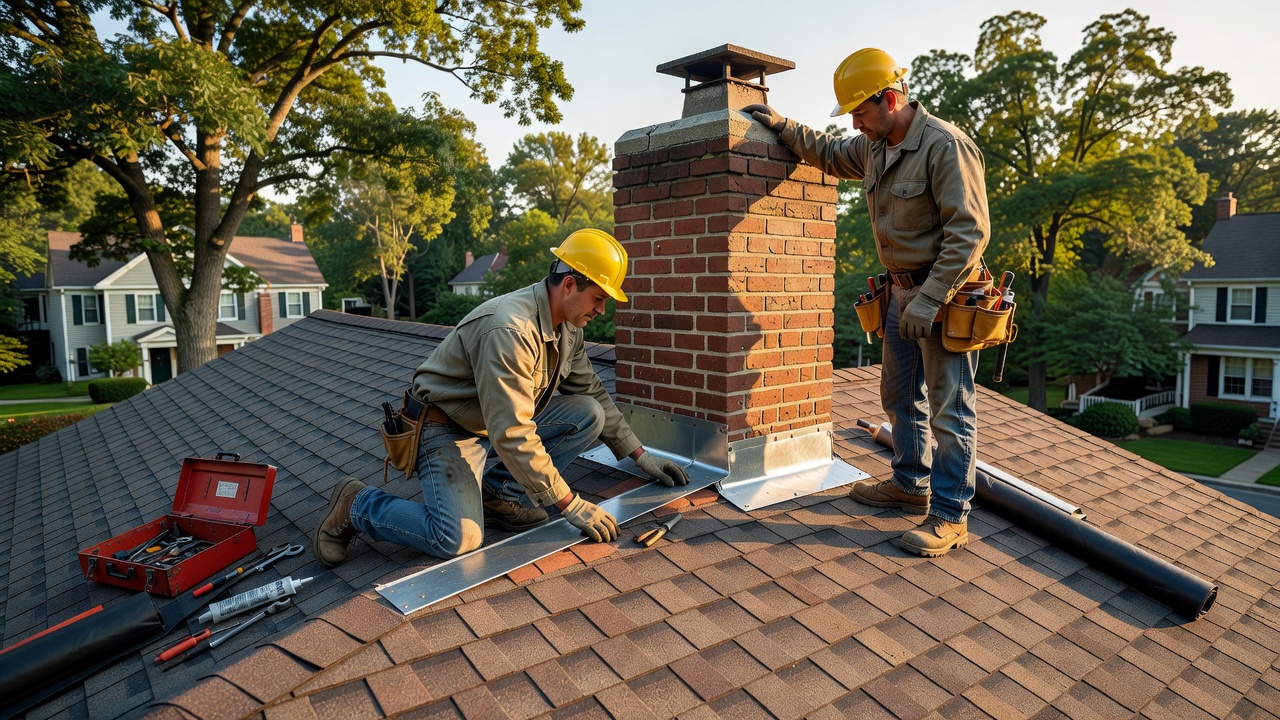
The difference comes down to the scope of the work. Sealing a small opening in otherwise sound flashing is very different from removing deteriorated flashing, installing new step and counter-flashing, repairing mortar joints, and restoring the roof around the chimney.
A professional should inspect the chimney and roof area before giving you a firm repair price. Be cautious about accepting a detailed flashing quote from someone who has not seen the chimney.
What Drives the Cost Up or Down
Chimney size and footprint. A larger chimney requires more flashing material and more installation time. Multiple flues or unusual chimney shapes can add complexity.
Roof pitch. Steep roofs require additional safety precautions and can take longer to access. A chimney on a walkable roof is a different project from one located on a steep roof with difficult access.
Flashing material. Flashing may be made from materials such as aluminum, galvanized steel, copper, or lead-coated products. The appropriate material depends on the existing roof, chimney construction, local conditions, and installation method. A contractor should explain why a particular material is appropriate for your system rather than automatically recommending the most expensive option.
Condition of the mortar joints. Counter-flashing is often integrated with the masonry. If the surrounding mortar has deteriorated, repointing may be necessary as part of the repair.
Condition of the existing flashing. A small separation or failed seal may be repairable. Flashing that is extensively corroded, damaged, or improperly installed may need to be replaced rather than patched.
Previous repairs. Multiple layers of old sealant can make repairs more difficult. Removing failed or excessive sealant may be necessary before a proper repair can be completed.
What’s Included in a Standard Repair vs. What’s Extra
| Typically Part of the Repair | May Be Billed Separately |
|---|---|
| Inspection of the visible flashing | Complete flashing replacement |
| Identification of obvious gaps or failed seams | Chimney cricket installation |
| Minor sealing or repair when appropriate | Masonry repointing |
| Basic debris removal around the work area | Roof repairs unrelated to the chimney |
| Repair documentation | Full chimney inspection or Level 2 inspection |
The exact scope depends on what the technician finds. A flashing repair does not automatically include a complete chimney inspection, roof repair, masonry restoration, or water-damage remediation.
Ask for the scope in writing before work begins so you know what the quoted price covers.
What a Homeowner Can Safely Check
There are a few things homeowners can do without getting on the roof.
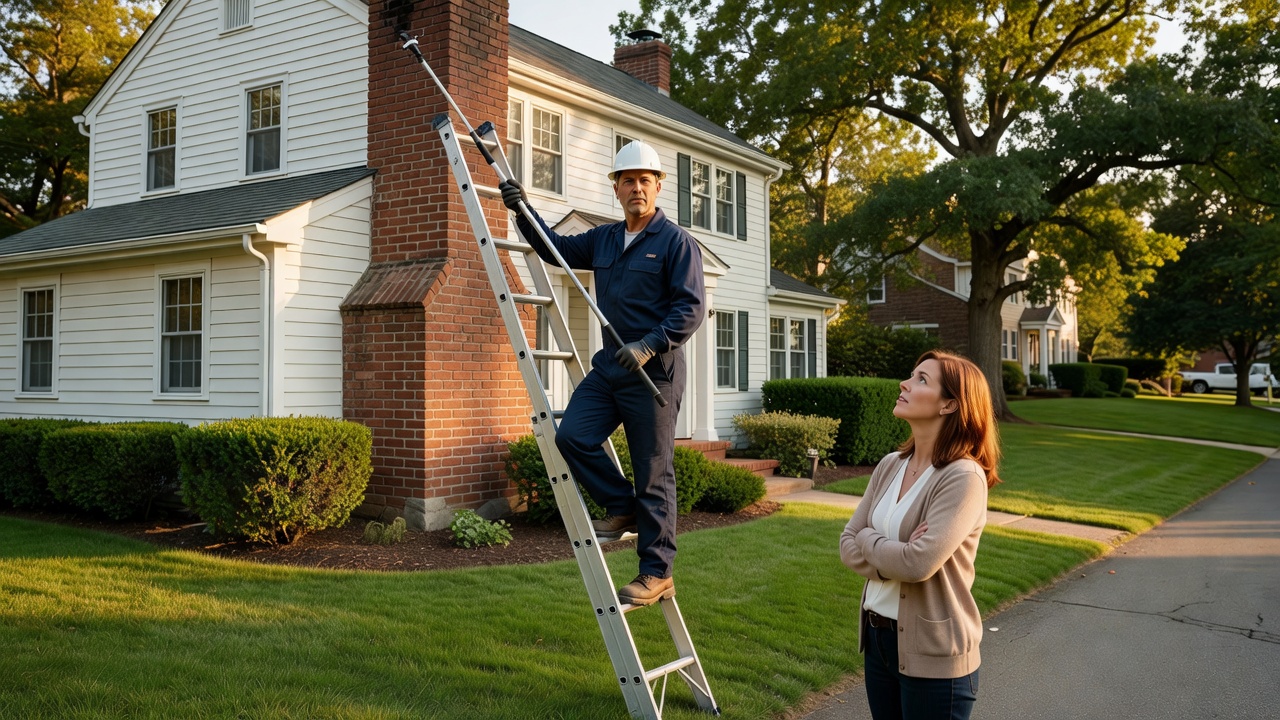
From the ground, look for obvious gaps, lifted metal, rust, loose masonry, or staining around the chimney. You can also check the attic if it is safely accessible and look for signs of moisture around the chimney penetration.
Do not assume that the visible location of a water stain is the source of the leak. Water can travel along roofing materials or framing before it becomes visible inside the home.
Climbing onto a steep or wet roof to inspect or repair flashing is not worth the fall risk. Roofing material may also be damaged if it is walked on incorrectly.
Applying sealant over a flashing problem without understanding the cause can also create a temporary patch rather than a lasting repair. If the flashing is loose, corroded, incorrectly installed, or separated from the masonry, the underlying problem should be addressed.
Why Finding the Actual Leak Matters
A water stain near a fireplace does not automatically mean the chimney flashing has failed.
Water can enter through the chimney crown, masonry joints, roof covering, flashing, or other areas around the chimney. It can then travel before appearing as a stain inside the house.
This is why accurate diagnosis matters. Repairing the wrong location may stop the leak temporarily or fail to address it at all.
A qualified chimney professional can inspect the chimney components and coordinate with a roofing professional when the roof covering or flashing system also needs evaluation.
When You Should Call a Professional
Call a professional if you notice recurring water stains, damp masonry, deteriorated mortar, visible flashing damage, or water entering around the fireplace after rain.
Professional help is also appropriate when the repair requires removing shingles, modifying counter-flashing, working on a steep roof, or accessing difficult areas around the chimney.
If the chimney has extensive masonry deterioration, the flashing problem may be only one part of a larger moisture issue. In that situation, repairing the flashing without addressing the masonry or crown may not solve the underlying problem.
How to Avoid Overpaying
Get a written scope of work before approving the repair. The estimate should explain whether the contractor is recommending a minor repair or complete replacement, what flashing material will be used, and whether masonry or roofing work is included.
Ask the contractor to show you the area that needs repair when it is safe to do so. Photos can also be useful when the damaged area is difficult to see from the ground.
If the recommended work is extensive, getting a second opinion is reasonable. A trustworthy contractor should be able to explain what failed, why the proposed repair addresses it, and what could happen if the problem is left unresolved.
One practical tip is to coordinate chimney flashing work with a planned roof replacement whenever possible. The chimney and roof intersection can be addressed while the roofing contractor already has the roof covering removed, which may reduce duplicated labor.
Serving Greenvale, Old Brookville, and the North Shore
Ridgewood Chimney serves homeowners throughout Nassau County, including Greenvale, Old Brookville, Brookville, and nearby North Shore communities.
If you have noticed water stains near your fireplace, visible flashing deterioration, damp masonry, or recurring leaks after rain, contact us for an inspection. We can assess the visible chimney and flashing conditions, explain what we find, and provide a clear estimate before repair work begins.
Related from Greenvale Chimney: Chimney Repair in Greenvale, NY · Chimney Repair in Greenvale · Chimney Repair in Greenvale, NY