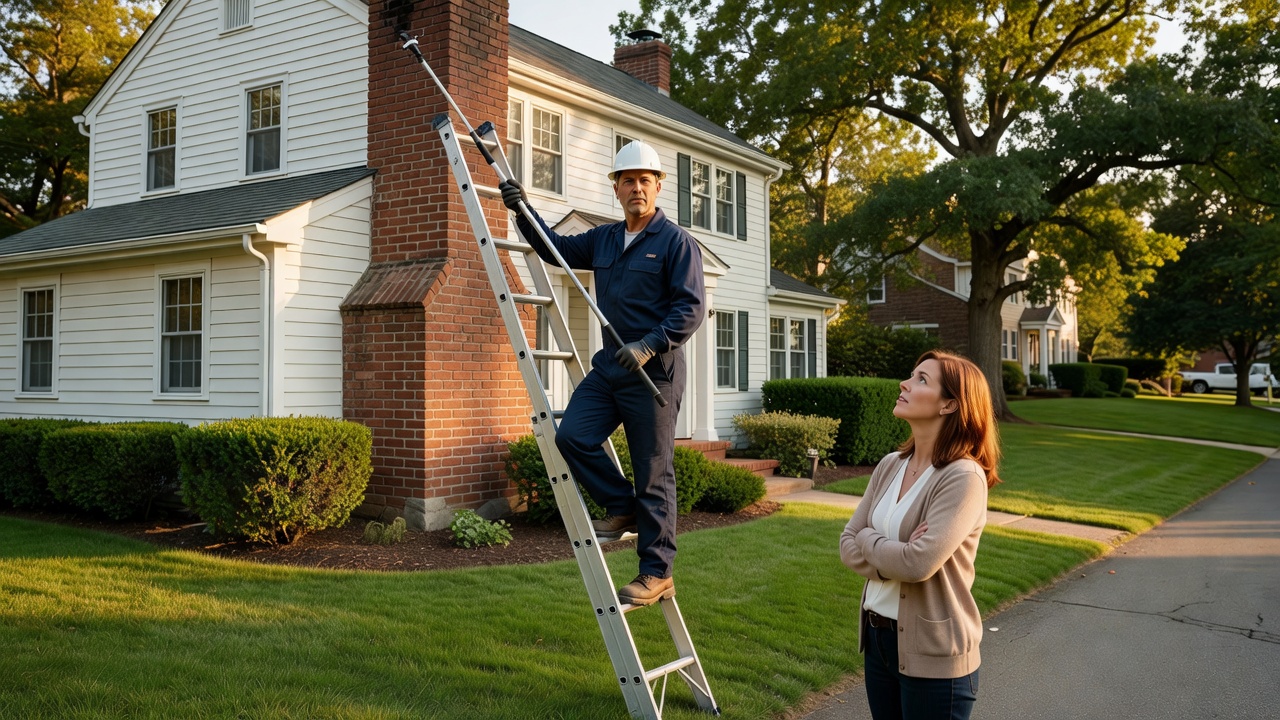
Chimney Masonry Repair in Greenvale and Glen Head: How to Choose the Right Contractor and What You Can Handle Yourself
Most homeowners in Greenvale and Glen Head notice chimney problems after something obvious happens. A loose brick lands in the yard after a storm, white staining appears across the exterior, or water shows up around the fireplace. The next question is whether to call a contractor immediately or take a closer look first. The answer depends on the type and severity of the problem. On Long Island’s North Shore, where repeated freeze-thaw cycles can be hard on masonry, knowing the difference between routine maintenance and structural repair matters.
This guide explains what homeowners can reasonably handle themselves, which repairs require a professional, how to evaluate a chimney contractor in Nassau County, and what questions to ask before signing a contract.
What Homeowners Can Safely Handle
Not every chimney-related task requires a contractor. Some basic maintenance and documentation can be handled by a careful homeowner.
Safe homeowner tasks include:
- Inspecting the chimney from the ground with binoculars after heavy rain or a winter storm
- Documenting visible cracks, staining, or damaged masonry with photographs
- Removing loose debris around an accessible chimney area when conditions are safe
- Applying a chimney-rated water repellent to sound masonry when the product is appropriate for the surface
- Replacing a standard chimney cap when the crown, flashing, and surrounding masonry are in good condition and the homeowner can safely access the area
Safety should always come first. A steep, wet, or difficult-to-access roof is not an appropriate place for a DIY project. If you cannot safely reach the chimney, leave the work to a professional.
Photographing visible damage is particularly useful. Pictures can help a contractor understand the issue before the appointment and make it easier for you to compare estimates from multiple companies.
What Requires a Professional
Some chimney repairs may look simple but involve structural, moisture, or fire-safety considerations.
Repointing and Tuckpointing
Mortar repair requires more than filling visible gaps. The replacement mortar needs to be compatible with the existing brick and the age of the chimney.
Older Glen Head homes may contain masonry that was built with softer, traditional mortar. Using a material that is significantly harder than the surrounding brick can contribute to additional deterioration.
A professional should evaluate the existing masonry before selecting the replacement mortar.
Spalling Brick Replacement
When the face of a brick begins to flake or break away, the problem may extend beyond the individual brick.
Water infiltration and repeated freezing can cause surrounding masonry to deteriorate as well. A contractor should evaluate the affected courses before replacing individual bricks.
Chimney Crown Repair
The crown protects the top of the chimney from water intrusion. Once it cracks or deteriorates, moisture can enter the masonry and accelerate damage.
A proper crown repair or replacement requires the correct materials, slope, and overhang so water is directed away from the chimney structure.
Flashing Repairs
The flashing where the chimney meets the roof is another important water barrier. Poorly repaired or improperly installed flashing can allow water into the attic or interior walls.
Because this area involves both roofing and chimney systems, flashing repairs should generally be handled by someone experienced with both.
Flue Liner Work
If the chimney serves an active heating appliance, liner condition is a separate concern from exterior masonry.
A damaged or improperly sized liner can create safety problems involving combustion gases and heat transfer. Liner inspection and relining should therefore be handled by a qualified professional familiar with the applicable chimney and appliance requirements.
Structural Repairs
Loose bricks, significant cracks, leaning masonry, or deterioration affecting the chimney stack above the roofline require professional evaluation. These conditions can indicate a structural problem that cannot be safely addressed with surface mortar or sealant.
Why Water Damage Deserves Attention
Water is one of the biggest threats to masonry chimneys in Nassau County.
Moisture can enter through cracks in the crown, deteriorated mortar joints, damaged flashing, or other openings. When temperatures fall below freezing, trapped water expands. Repeated cycles can gradually enlarge cracks and weaken the surrounding masonry.
A small crack that appears relatively harmless in the fall can become significantly worse after several months of winter weather.
Using the wrong repair material can also create problems. Mortar that is incompatible with the existing brick may trap moisture or place additional stress on the masonry. That’s why matching the repair material to the existing structure is important.
There is another concern when a chimney serves a gas or oil appliance. Damage to the chimney or liner can affect the safe movement of combustion gases. If you notice signs of deterioration around an active chimney, a professional inspection is the safest way to determine whether the problem extends beyond the exterior masonry.
How to Evaluate a Chimney Contractor
Greenvale and Glen Head are located in Nassau County, so homeowners should verify that contractors meet applicable local licensing and insurance requirements before work begins.
Ask for the contractor’s license information and verify it through the appropriate Nassau County authority.
For chimney-specific work, CSIA certification is another useful credential to look for. The Chimney Safety Institute of America provides certification for chimney professionals, particularly for inspection and cleaning work.
Questions worth asking include:
What type of mortar will you use, and why is it appropriate for my chimney?
A knowledgeable contractor should be able to explain the material choice rather than simply saying it is the product they normally use.
Can you provide before-and-after photographs?
Documentation makes it easier to understand what was repaired and whether the original problem was properly addressed.
Do you carry liability and workers’ compensation insurance?
Ask for certificates rather than relying solely on verbal assurances.
What happens if you discover additional damage?
A professional should explain how additional work will be documented and approved before the scope or price changes.
Will you inspect the flue if the chimney serves an active appliance?
Exterior masonry and interior chimney conditions are separate concerns. If the system is being used for combustion, the contractor should explain whether an inspection is appropriate.
Red Flags That Should Make You Walk Away
Several warning signs deserve attention before you sign a contract.
Be cautious about a contractor who provides a quote without properly examining the affected area. A contractor should understand what they’re repairing before giving you a firm recommendation.
Be especially careful with cash-only pressure combined with urgency. Statements about an imminent collapse or immediate danger should be supported by actual findings rather than used to pressure you into signing immediately.
A written contract should identify the scope of work, materials, price, payment terms, and warranty information.
Another concern is applying new mortar directly over deteriorated existing joints without properly preparing the surface. A cosmetic patch may look good initially but can fail quickly if the underlying joint was not properly addressed.
Finally, if the work involves a chimney liner or appliance connection, ask how the contractor will address applicable chimney standards and local requirements.
What Chimney Masonry Repairs Cost in Nassau County
The source estimates provided for this market place typical costs around:
| Repair | Approximate Cost |
|---|---|
| Repointing | $500 to $1,800 |
| Crown repair or replacement | $400 to $900 |
| Section of spalled brick replacement | $2,000 to $4,500 |
These are general Nassau County estimates, not guaranteed quotes. Chimney height, roof access, damage severity, materials, and project scope can significantly affect the final price.
For larger repairs, getting at least two written estimates is a sensible way to compare the proposed work. Make sure each contractor is quoting the same scope rather than comparing different repair methods based solely on the final price.
A very low quote is not necessarily a bargain if it leaves damaged masonry or underlying water problems unresolved.
Get the Chimney Checked Before Winter
If you’ve noticed cracked mortar, spalling brick, white staining, loose masonry, or water around your fireplace, don’t wait for another freeze cycle to see what happens.
Ridgewood Chimney serves Greenvale, Glen Head, and surrounding Nassau County communities. The company states that its inspections follow NFPA 211 standards and that its technicians carry appropriate credentials and insurance.
A professional inspection can help determine which problems require immediate attention and which maintenance tasks can reasonably wait. The goal is not to turn every visible crack into a major repair. It’s to understand what is actually happening to the chimney before a manageable masonry problem becomes a much larger one.
Related from Greenvale Chimney: Chimney Repair in Greenvale, NY · Chimney Repair in Greenvale
Areas we serve
Greenvale, NY · Greenvale, NY · Greenvale, NY · Greenvale, NY · Greenvale, NY